
National Mission for Sustaining the Himalayan Ecosystem for a Resilient Future
The Himalayas are vital to India’s climate resilience, water security, and cultural heritage, and strengthening the National Mission for Sustaining the Himalayan Ecosystem is key to protecting these landscapes and the communities that rely on them.
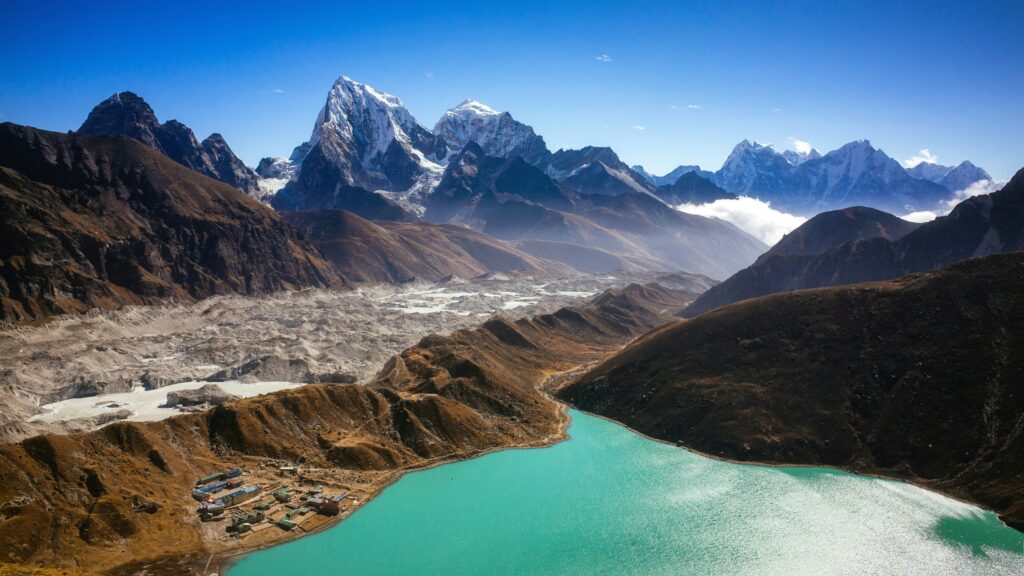
The Himalayas are often called the “Third Pole” because they hold vast amounts of snow and ice and are the source of major rivers like the Ganga and Brahmaputra. They support millions of people, unique plants and animals, and play a crucial role in maintaining a stable climate. But today, this fragile region is under serious threat. Glaciers are melting faster, rainfall patterns are changing, and floods and landslides are becoming more frequent. To protect this vital ecosystem, India launched the National Mission for Sustaining the Himalayan Eco-system (NMSHE) as part of its national climate strategy.
NMSHE was conceived with an ambitious, long-term vision: to build a knowledge-based and adaptive framework for sustaining the Himalayan ecosystem, spanning 11 Indian states. It aimed to enhance understanding of climate impacts, support sustainable development of mountain communities, and conserve biodiversity and water resources. From monitoring glaciers and permafrost to studying traditional knowledge systems, it promised an integrated scientific and community-oriented approach.
However, the mission’s progress has been slow and scattered. While it laid the groundwork for research through nodal institutions like the GB Pant Institute and state climate cells, the translation of this knowledge into policy and community resilience remains limited. Institutional silos, funding constraints, and a lack of real-time data sharing between central and state agencies have hindered its effectiveness. Recent disasters, including cloudbursts in Uttarakhand, floods in Sikkim, and the melting of the Chorabari glacier that triggered the 2013 Kedarnath tragedy, underscore the urgency of building a dynamic and decentralised early warning and climate adaptation system.
One of the mission’s key mandates was to evolve strategies for sustainable tourism, urbanisation, and hydropower in the fragile region. But in reality, unregulated development has continued. Roads cut hastily through mountains, dams constructed without adequate ecological assessments, and booming tourist footfall, all increase landslide and flood vulnerability.
The Himalayas are often called the “Third Pole” because they hold vast amounts of snow and ice and are the source of major rivers like the Ganga and Brahmaputra.
In this context, there is a pressing need to strengthen NMSHE through better coordination with state governments, integration with district-level climate action plans, and collaboration with ongoing scientific efforts. For instance, the CryoSCOPE project, co-funded by the European Union and the Indian Ministry of Earth Sciences, brings together 19 partners across eight countries to study cryospheric changes in the Himalayas, including institutions such as IIT Madras, IIT Roorkee, and the University of Kashmir. Going forward, the mission must move from passive data collection to proactive climate risk reduction. This includes developing glacier lake outburst flood (GLOF) prediction models, mapping permafrost zones, and empowering local panchayats with climate-resilient practices. Integrating indigenous knowledge, such as traditional water harvesting or sustainable grazing, is not only respectful but also necessary for context-specific adaptation.
India’s Himalayan states are on the frontline of climate change. Strengthening the National Mission for Sustaining the Himalayan Eco-system is not just an ecological imperative; it is a national one. As the world edges closer to dangerous tipping points, our ability to protect the Himalayas will be a litmus test for climate leadership in the Global South.


Join Planet
REVOLVE today
We strive to communicate sustainability for a better world for the next generations.
Support us by becoming a member of REVOLVE Planet today.
Become a Member