A Traditional Blend of Innovation
Old meets new as Lesvos positions itself as a Mediterranean agro-innovation hub.
The unearthing of a Bronze Age olive press dating back 4,000–4,800 years attests to the long love story Lesvos has had with olive oil. But you don’t need to travel so far back in time to see it. Today, the Aegean island bristles with the iconic Mediterranean tree – an estimated 11 million of them. In Lesvos’ towns and villages, shops proudly stock bottles of beloved local olive oil, which is eagerly glugged over traditional Greek salads.
A rare frost wiped out most of Lesvos’ olive trees in 1850, prompting local farmers to rebuild with more resilient trees, often planted on terraced systems that stagger the steep hillslopes of the island. The stone terraces are quintessential feature of the island’s hillsides. But their function is far more than just aesthetic, as we will see.
Nowadays frosts are rare in Lesvos, and they are only set to get rarer as the Mediterranean stakes its unenviable claim to being one of the fastest warming regions on Earth. Local olive farmers must contend with the consequences of global warming, which rears its head in the form of desertification, water scarcity, and increased soil erosion.
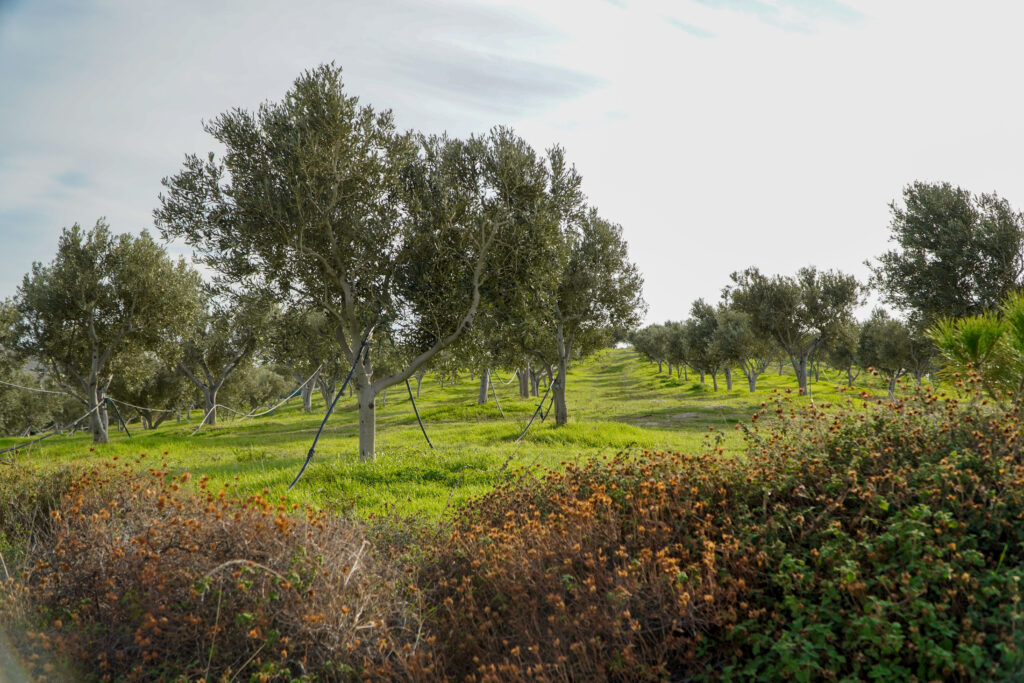
Beyond climate, the soils of Lesvos themselves pose formidable challenges. Much of the island’s terrain is mountainous and underlain by volcanic rock, producing thin, stony soils that are low in organic matter and easily eroded when vegetation cover is lost. Abandoned terraces, a legacy of rural depopulation, have in many places collapsed, triggering runoff and gully formation during winter storms. These processes strip away the fertile topsoil that olive trees depend on and reduce the land’s water-holding capacity.
These climate challenges combine with, and are exacerbated by, social trends such labour shortages and a youth exodus, as well as economic ones, like rising prices. It is a tricky cocktail of challenges, and a bitter one if nothing is done.
Farmers in Lesvos are facing it with a combination of tradition and modern innovation.
Rural action
For some, it would be considered a hike, but Myrta Kalampoka makes a tour of the vertiginous paths that wind through her olive grove look like a stroll. She stops to pick a sprig of wild oregano from one of the many aromatic shrubs between her hundreds of olive trees. Her horses watch on from the side of the path.
“They’re the most intelligent animal, they collect the wild grass, leave the herbs, and fertilise the soil,” Myrta says, adding that during the harvest, the horses help transport the olives from the grove to the mill.
Myrta runs the Eirini Plomariou farm with her husband, Nikos, and their children, near the town of Plomari in southeast Lesvos. The organic olive they produce is award-winning and is well-known in Lesvos, enough so to earn a spot on the shelves of the duty-free shop at Mytilene’s small airport. The farm sits around 300 metres above sea level and has a dry Mediterranean climate, which is good for olive cultivation.
But when it is too dry, the harvest can become dangerous. Due to the topography of the farm, the family and farm workers must clamber onto the trees to shake the olives free. The olives fall into large black nets that are strung up between the trees and are then collected. It’s arduous work that Myrta says requires a certain degree of trigonometry.
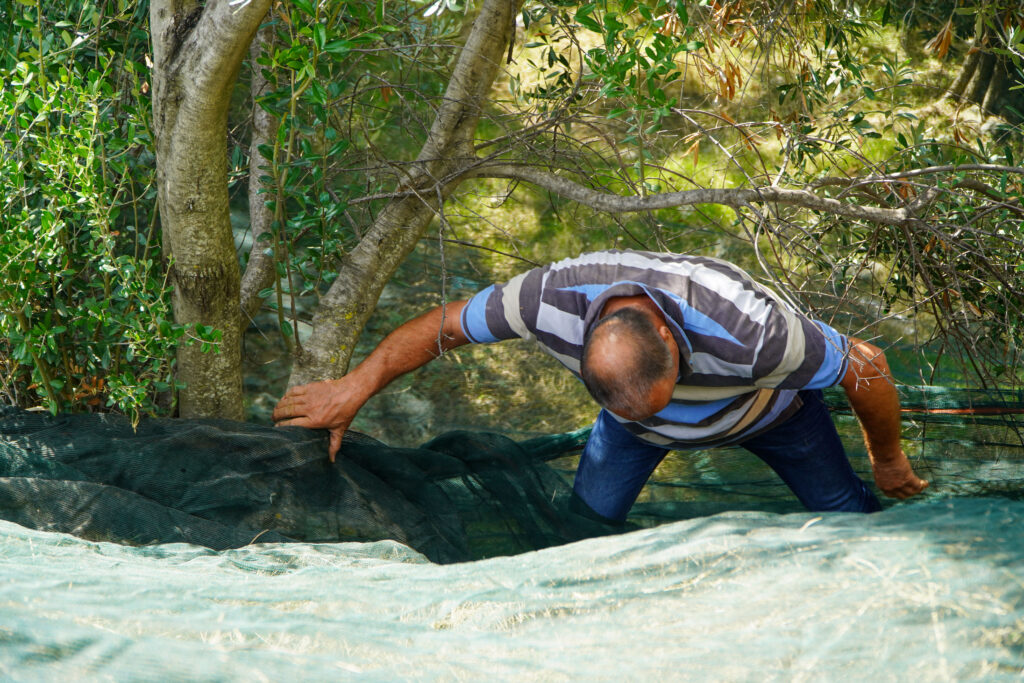
“We haven’t had any rain since May,” she says during an interview in October 2025. “We are waiting for the first rain otherwise the olive trees will be too dry, and when we are climbing on them for harvesting, they will break,” she adds.
Long spells of wet weather also affect the roots of the trees and the soil itself. Too much rain and the roots can become waterlogged, which also damages the harvest. This is where the stone terrace systems come into play.
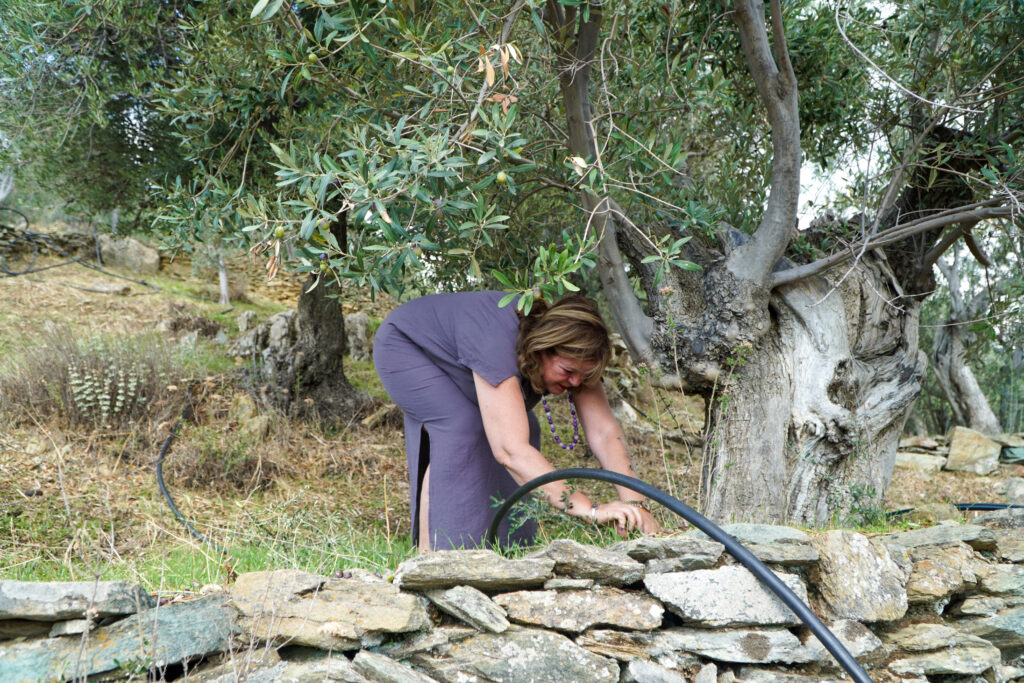
The terraces on the farm are semi-circular constructions built with small to medium flat stones that are carefully piled on top of each other around the base of the olive trees. They are sturdy enough to provide support to the soil on hilly terrain but porous enough to aerate the soil and allow excess humidity out.
It’s a special, very old technique that we use here to protect the soil and the roots of our trees.
Myrta Kalampoka, owner of the family run Eirini Plomariou farm
“It’s a special, very old technique that we use here to protect the soil and the roots of our trees,” Myrta says. These terraces are crucial in preventing topsoil loss and nutrient depletion, two of the most acute soil challenges on Lesvos’ slopes. Where terraces have been neglected or damaged, the soil often degrades into bare, compacted ground that struggles to regenerate even with rainfall.
The GOV4ALL project
The Eirini Plomariou farm is a partner in the EU-funded GOV4ALL project and is active in the Aegean soil health living lab, one of five established by the project around the Mediterranean region. The aim of the living lab is to position Lesvos as a hub for regenerative agricultural practices that encourages local farmers to learn about soil stewardship. Led by the Soil and Water Resources Institute (SWRI) of the Hellenic Agricultural Organization DIMITRA, the living lab will also transfer know-how to other territories in the Mediterranean that face similar climate challenges.
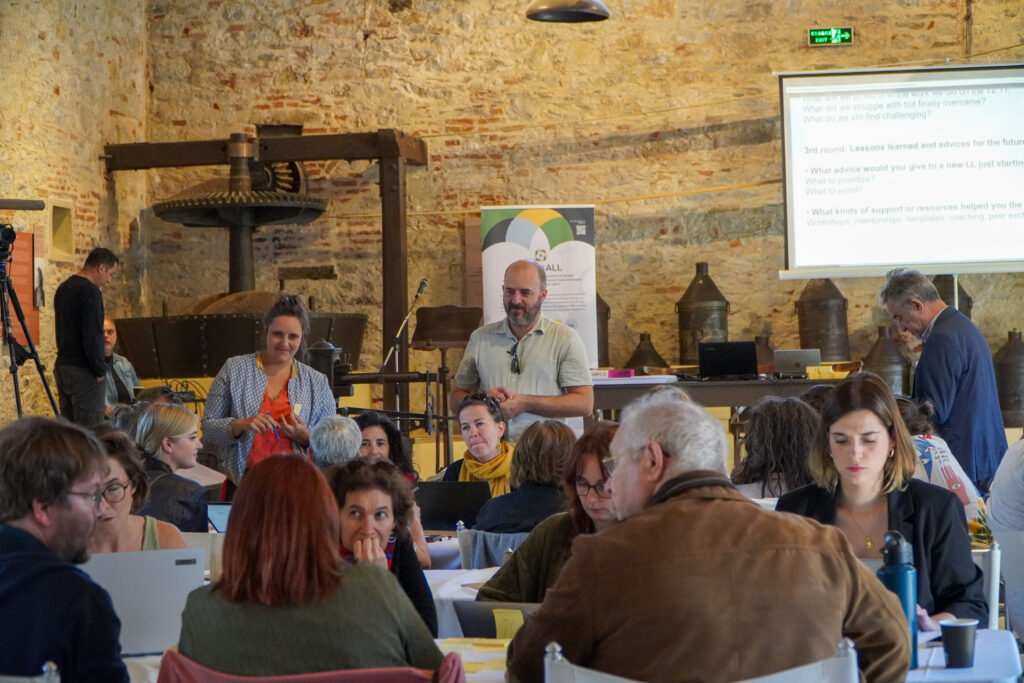
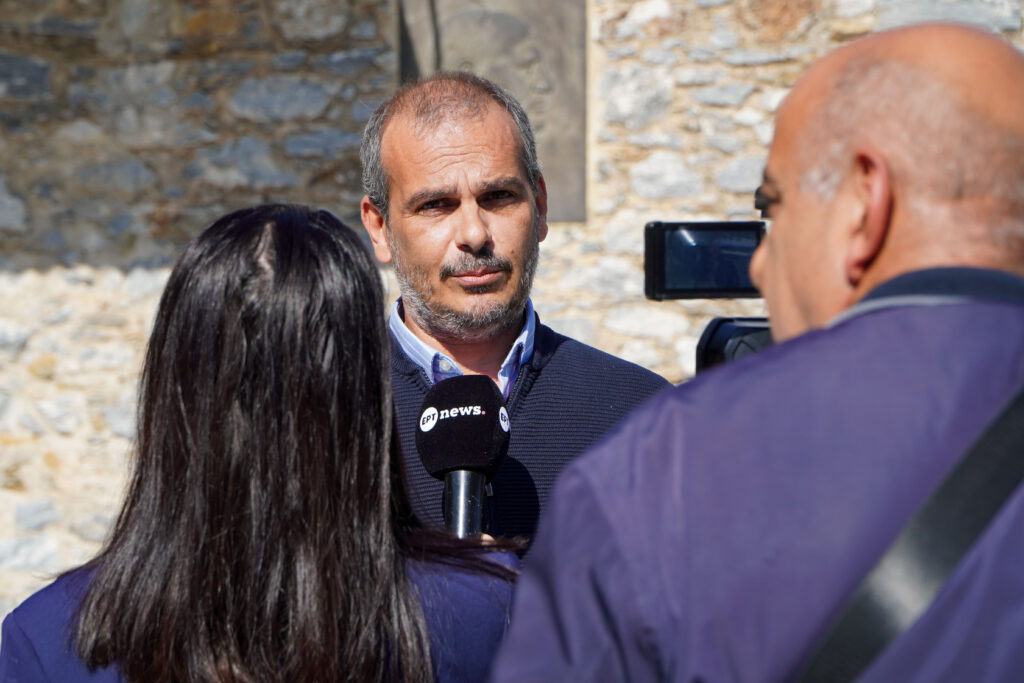
These living labs are found in Greece, southeast France, southeast Spain, and on the island of Menorca. They are part of a wider initiative by the EU, which aims through the Soil Mission to establish 100 soil health living labs across the continent. In GOV4ALL, the living lab territories combine traditional knowledge that comes from the farmers with innovation and technology brought to the table by researchers and private enterprise specialists.
An oasis
The landscape changes dramatically as you move west to east across the island of Lesvos through pine forests, past the Kalloni Salt Pans up into the misty mountains and beyond the petrified forest down onto the wind-battered slopes that descend to Sigri, a small coastal town.
At a glance, the landscape could be mistaken for somewhere on Europe’s Atlantic coastline, western Ireland or Scotland. The climatic and soil conditions here are not ideal for cultivation, which makes it even stranger, then, when you set eyes on the sprawling oasis of olive groves, palm trees, and pomegranates that sit across from the town.
The Falcon Oleve-run Faros estate is, more than anything else, an experiment in organic agriculture. It is only possible thanks to the financial resources of the owners, the entrepreneurial Tirpintiris family, whose life project has been to transform the barren land into a peninsula bursting with life, both agricultural and natural.
“After many trials, efforts, mistakes, too much effort, we noticed that cultivating organically using many different techniques, we could manage to make the soil more fertile than it used to be,” says Vasileios Mouselimis, an agronomist and consultant specialising in olive oil production with Falcon Agro.
After many trials, efforts, mistakes, too much effort, we noticed that cultivating organically using many different techniques, we could manage to make the soil more fertile than it used to be.
Vasileios Mouselimis, agronomist and consultant specialising in olive oil production with Falcon Agro
“There was plenty of seaweed on the shores of this area, there was plenty of manure, we had to mix it and compost it, these were some of the main materials that we used successfully,” he explains.
Like Myrta, the Faros estate uses terracing around some of its olive groves, although the terrain is not as steep as in Plomari. The terraces at the Faros estate are built along contour lines and not as semi-circular constructions around each tree. Vasileios digs into more details about the practices.
“Since we created the terraces, which is the greatest technique for this place, we noticed that at the edge of the terraces the growth of the tree was much more vigorous,” he explains. “The upper layers of the soil, which is the most fertile usually, was concentrated at the edge of the terraces. The other thing is the roots became warmer, therefore they had more water available.”
To deal with the windy conditions on this western edge of Lesvos, the estate has created hedgerows to protect the olive groves. The sprawling estate is now home to over 50,000 olive trees and 40,000 other tree species, such as palms and pomegranate trees. Between the trees, ground is full or aromatics and grasses, which attract insects and birds creating an oasis of biodiversity in the surrounding desertified landscape.
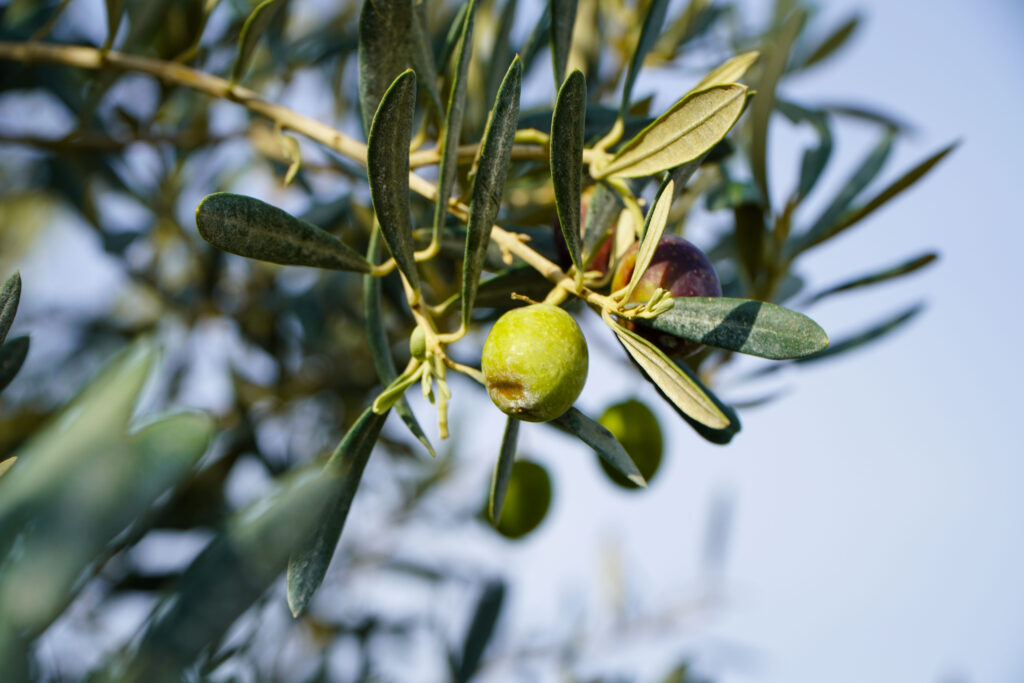
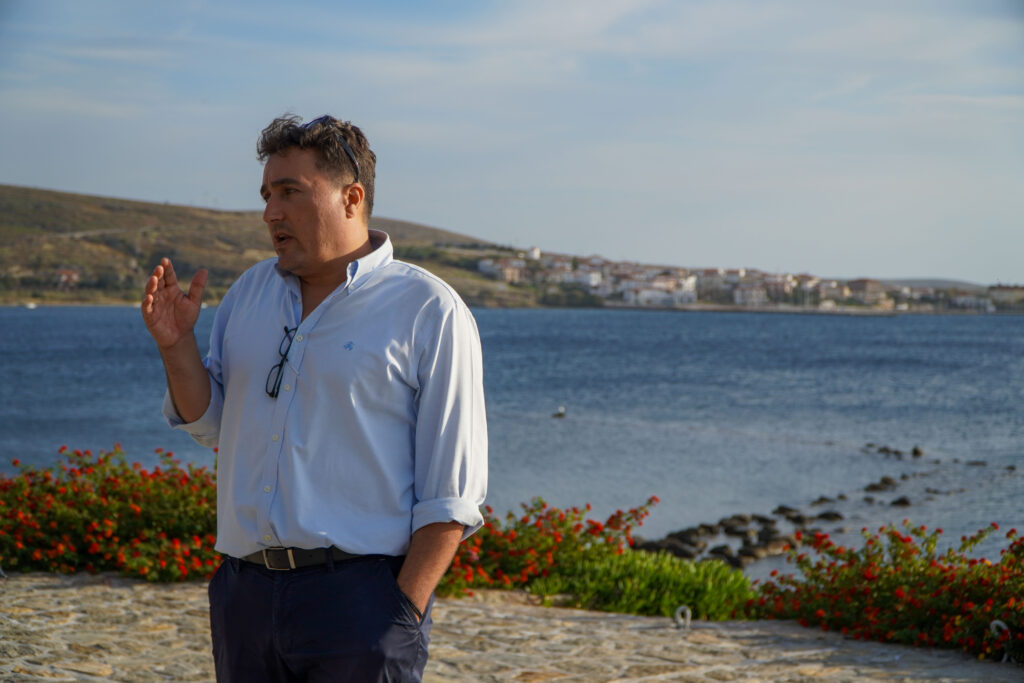
The estate owners are fully aware that the model of organic agriculture is not necessarily replicable for all farmers in Lesvos, but they hope that it can serve as an organic farming school and operational demonstration site where farmers, agronomists, and policy makers can come to learn about regenerative practices.
A lighthouse region
Under the umbrella of the Aegean Living Lab, the Faros estate, the Eirini Plomariou farm, and around a dozen other pilot farms on the island are working with GOV4ALL partners to turn Lesvos into a regional hub of regenerative agriculture, where soil health forms the foundation of community well-being. Project findings from Lesvos — spanning soil science, governance, and business models — will be shared across the project’s living labs and beyond.