
Bubbles to Biofuel: Decarbonising Road Transport
Decarbonising road transport requires collaboration, diversified solutions, and innovation for a fair and effective transition across Europe.
Picture the scene: it’s an early winter evening and you’re settling in for a cosy night at home. You grab a bottle of Rioja from the shop to pair with your nut roast. Just because you’re treating yourself doesn’t mean you can’t be sustainable, right? You’ve chosen wine from an ecological vineyard in Spain, and most of your meal is made from locally sourced produce.
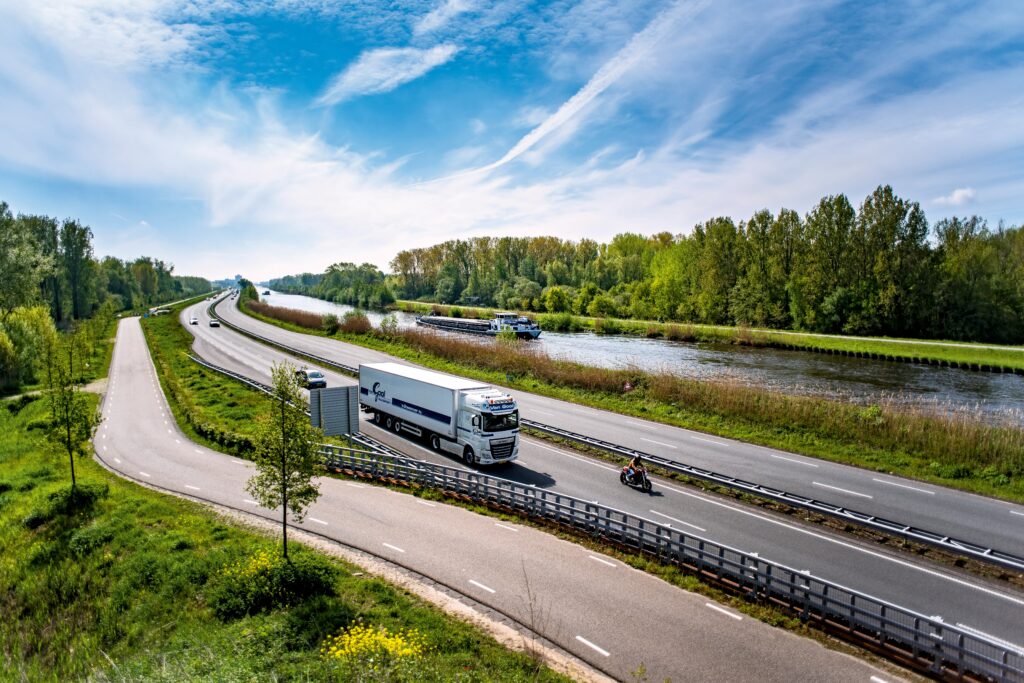
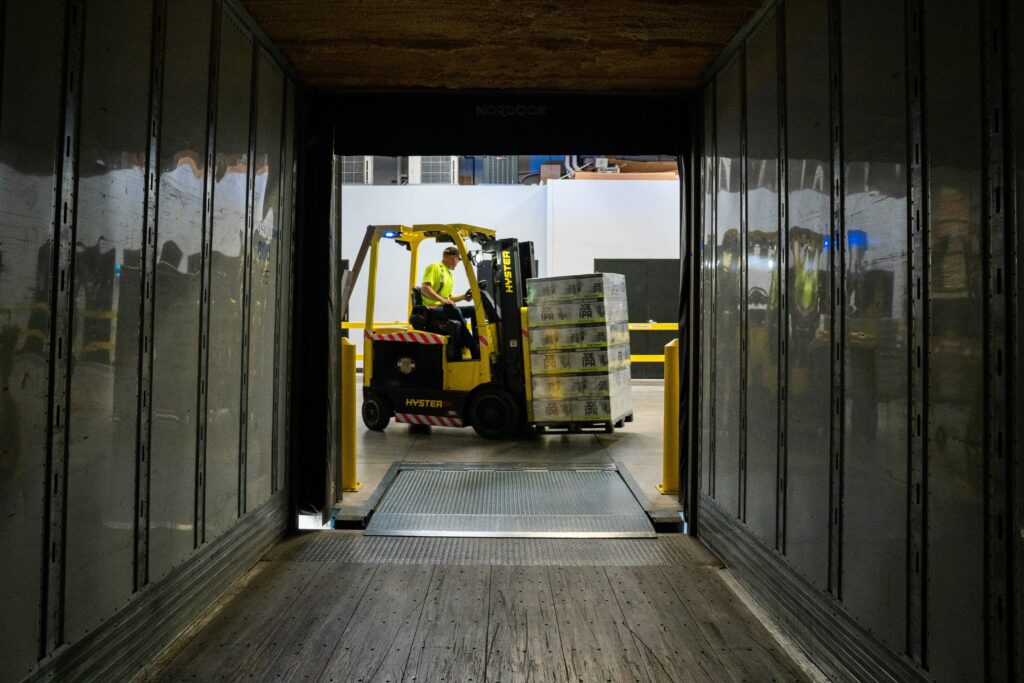
But all this food and drink had to reach you somehow – and that journey was almost certainly by road. Most of our everyday necessities, whether from the supermarket or the local deli, spend part of their journey on a Heavy-Duty Vehicle (HDV). Road freight transport alone is responsible for around one-fifth of Europe’s transport-related greenhouse gas emissions (GHGs), according to the Smart Freight Centre in 2021 report. To meet the EU’s ambitious net-zero target by 2050, this sector needs to move away from fossil fuels, and fast.
The good news? That same wine you’re enjoying is part of a small but growing group of innovations helping to transform how we fuel road transport. Through collaboration and circular thinking, wineries are turning their own fermentation CO₂ into clean, renewable fuel – closing the loop between what we drink and how we deliver it.
EU’s decarbonisation ambition off track for transport
The European Union has pledged to achieve climate neutrality by 2050, in line with the 2015 Paris Agreement. In some areas, progress is encouraging. The energy sector –which, according to the European Commission accounts for more than 75% of the EU’s total greenhouse gas emissions – is undergoing rapid transformation. The bloc aims to raise the share of renewables to at least 42.5% by 2030, and State of the Energy Union Report 2025 published by the European Commission in November shows the clean energy transition gaining pace, with emissions falling 2.5% in 2024 compared to 2023.
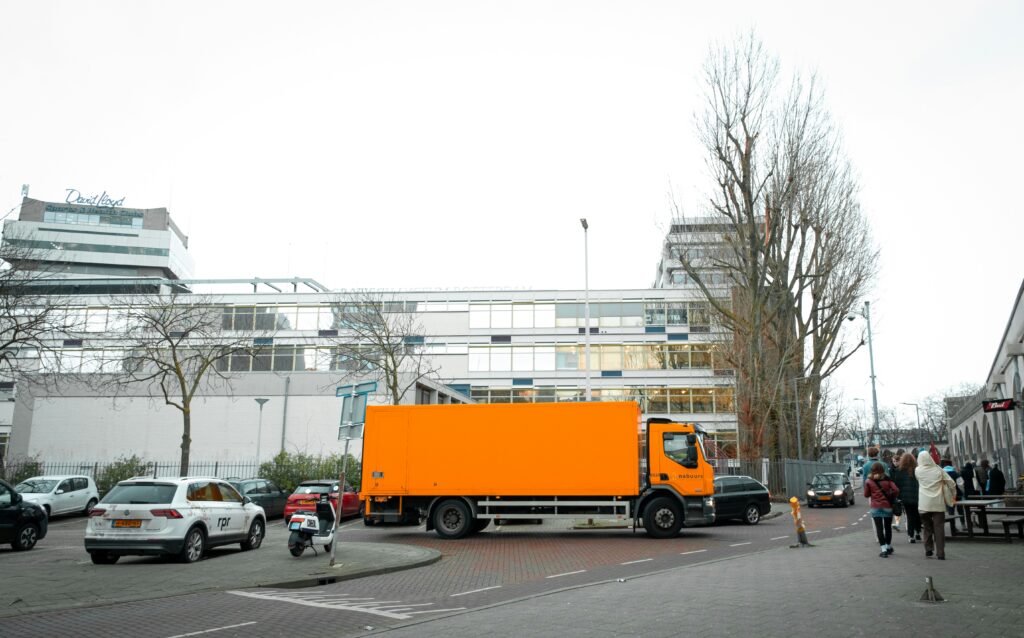
Yet one major sector remains stubbornly reliant on fossil fuels: road transport. HDVs carry about 75% of all freight transported over land in the EU, according to the European Automobile Manufacturers’ Association (ACEA), and they run almost entirely on high-energy fossil fuels such as diesel, petrol, and gas. In 2023, 96.4% of all EU trucks used diesel, while only 0.1% were zero-emission.
The Renewable Energy Directive III (RED III) is part of the EU’s Fit for 55 package – a set of policies designed to cut greenhouse gas emissions by at least 55% by 2030 compared to 1990 levels. RED III requires each EU country to either cut the greenhouse gas intensity of transport fuels by 14.5% or ensure that 29% of energy used in transport comes from renewable sources by 2030.
First-generation biofuels have been capped at 7% of the energy used in transport under RED III, due to concerns over competition with food production and land-use change.
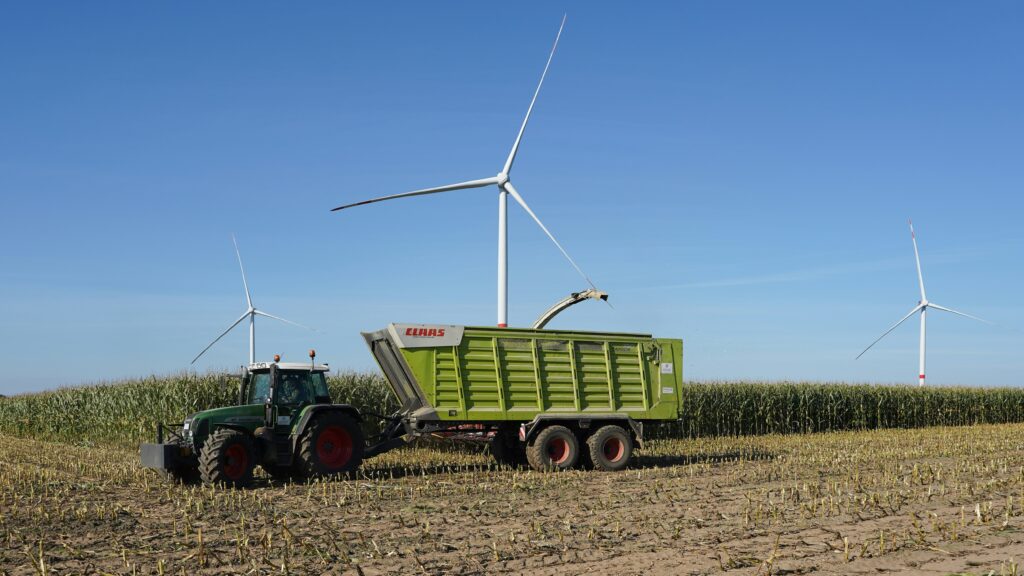
Biofuels, produced from organic materials such as corn, sugar beet, or soy, offer another alternative to fossil fuels. Their key advantage is compatibility – blends of bioethanol and biodiesel (such as E10 or B20) can run in most existing engines, pipelines, and fuel stations without major modifications. However, these so-called first-generation biofuels have been capped at 7% of the energy used in transport under RED III, due to concerns over competition with food production and land-use change. A recent investigation in Brazil by Reuters revealed cases of deforestation directly linked to corn-ethanol production.
RED III stipulates that at least 5.5% of transport energy must come from advanced biofuels – fuels made from waste and residue feedstocks rather than food crops – and renewable fuels of non-biological origin (RFNBOs), such as hydrogen-based fuels produced using renewable electricity, with at least 1% specifically from the latter.
Road transport’s heavy reliance on fossil fuels makes it a “hard-to-abate” sector – one of several industries, along with aviation, shipping, steel, and cement, that according to a 2024 report from the International Renewable Energy Agency (IRENA), none of these sectors are currently on track to reach net-zero emissions by 2050.
Transport vehicles moving goods across Europe and globally account for nearly one-quarter of all transport-related CO₂. To meet the EU’s 2030 climate targets, the region would need to have around 400,000 zero-emission trucks on the road by the end of the decade – meaning one in three new trucks sold each year must be zero-emission, according to the ACEA.
But with freight demand expected to grow 47% between 2015 and 2050 , transforming this sector is proving to be one of Europe’s toughest challenges.
Can’t we just electrify?
In theory, electrifying heavy-duty road transport promises cleaner air and lower operating costs. The EU’s 2035 ban on internal combustion engines for cars and vans is a major step towards encouraging electrification across road transport. Some countries have gone further to incentivise freight electrification. The Netherlands, for example, will introduce a Heavy Goods Vehicles charge in 2026 that gives electric trucks a significantly lower rate than diesel trucks, creating a clear incentive to switch to cleaner vehicles.
But opponents say that the move towards electrification is going too fast, too quickly. Dariusz Joński, Polish MEP and a member of the European Parliament’s Committee on Transport and Tourism, put to an audience at the June 2025 event Decarbonising EU Road Transport: Solutions for 2030 and Beyond, organised by the International Road Transport Union: “The infrastructure isn’t ready right now. How can we push for electrification when large parts of Europe don’t even have basic charging infrastructure?”
ACEA data supports this concern: Europe currently has only about 1,100 public charging points powerful enough (350 kW or above) for heavy-duty trucks. Meeting 2030 needs would require around 50,000 chargers, including 35,000 Megawatt Charging System units.
To overcome this, EU Commissioner for Transport and Tourism Apostolos Tzitzikostas unveiled the Clean Transport Corridor Initiative in September 2025, aimed at speeding up the rollout of recharging infrastructure for heavy-duty vehicles along major freight routes, including the Scandinavian–Mediterranean and North Sea–Baltic corridors.
Combined with the EU Greening Corporate Fleets initiative, which targets the decarbonisation of company-owned vehicles – including freight vehicles – these measures form a coordinated effort to build the backbone of Europe’s clean transport network and drive the transition toward zero-emission mobility.
Hydrogen fuel cells offer another route to decarbonisation. Vehicles can cover long distances and refuel in minutes, making them ideal for heavy-duty freight where battery-electric options struggle with range and charging time. However, high renewable hydrogen costs, limited refuelling infrastructure, and costly fleet overhauls remain major challenges.
Critics caution that the deployment for decarbonisation remains uneven across member states: “We’re going to fight hard against the EU proposal for one-size-fits all rules on green corporate fleets,” stated Joński. “This may work in Rotterdam, maybe in Copenhagen, but not in Białystok, my city in Poland.”
In an October 2025 letter to EU leaders, European Commission President Ursula von der Leyen sought to reassure industry by pledging to accelerate the review of vehicle CO₂ standards and emphasising technological neutrality. She specifically noted that the Commission was assessing the role of zero-emission and low-carbon fuels, including advanced biofuels, in the transition to zero-emission road transport beyond 2030. Von der Leyen stressed that the EU’s shift toward climate neutrality and circularity requires “a combination of ambition, speed, pragmatism and flexibility.”
Such pragmatism is essential in a sector as fragmented as road freight: Europe has more than half a million haulage operators, 99% employing fewer than 50 people, according to the Smart Freight Centre. For these businesses, the upfront cost of new technologies, new maintenance skills, and uncertainties around charging or refuelling availability pose real operational risks.
The challenge is to develop fuels that are renewable, truly sustainable, and compatible with existing infrastructure – bridging the road toward full decarbonisation of the transport sector.
From bubbles to alternative biofuels
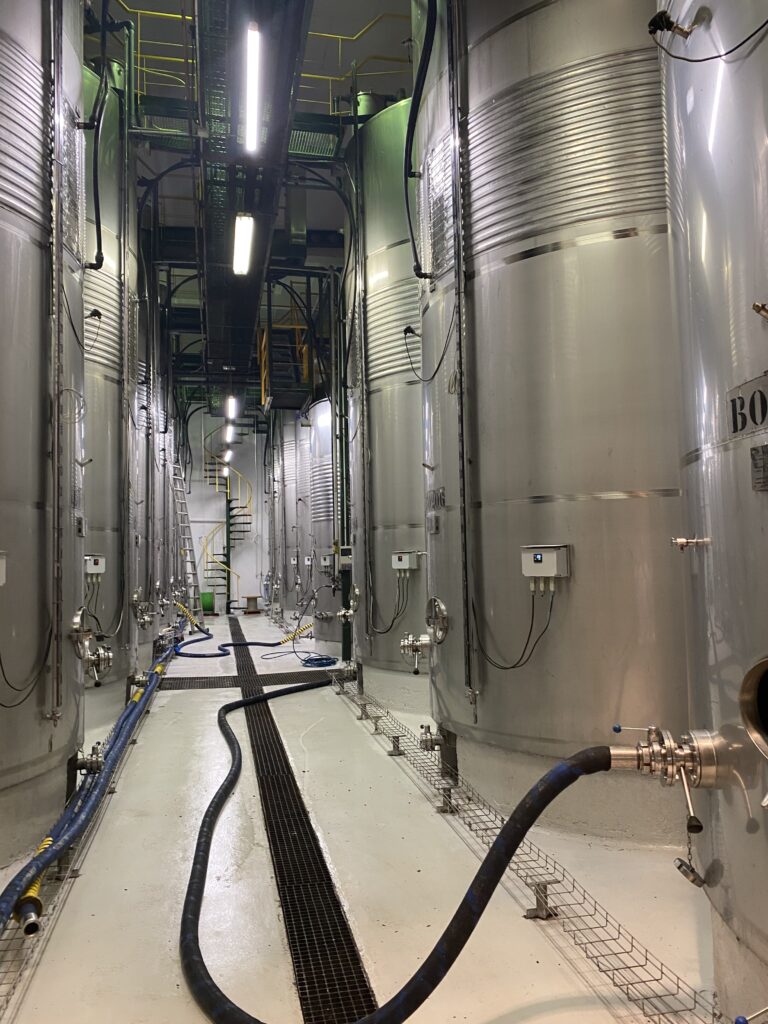
Stepping inside the Viñas del Vero bodega feels like entering any modern winery at harvest time. Tall stainless-steel tanks line the hall, each quietly alive with fermenting grape must. The air is rich with the scent of yeast and fruit. But here, unlike most wineries – where the CO₂ produced during fermentation simply escapes into the air – a network of pipes weaves between tanks, capturing it instead.
Set in the foothills of the Pyrenees in Huesca, Spain, Viñas del Vero is part of González Byass, a fifth-generation family company with nearly two centuries of winemaking history. The multinational group operates in Spain, Chile, and Mexico, managing around 2,000 hectares of vineyards, with the same amount cultivated by associated growers. González Byass sells its wines in more than 120 countries.

Since 2013, the winery has measured its carbon and water footprint across all scopes. Based on those results, it has set ambitious targets: a 55% emissions reduction by 2030 and net-zero by 2050. To reach these goals, Viñas del Vero is investing in renewable energy, sustainable mobility, efficient water use, sensor-based monitoring, and regenerative viticulture.
“After studying our carbon footprint, we found that nearly 60% of our direct emissions are biogenic, meaning they come from fermenting grapes.” José María Ayuso Rodríguez, Manager of Vineyards and Projects at González Byass told REVOLVE. “We quickly realised we could turn this problem into an opportunity.”
The process starts by capturing the CO₂ that naturally bubbles out as grapes ferment. The gas is then cleaned, compressed, and stored safely for reuse. Around 30% of the captured biogenic CO₂ is put straight back to work within the winery – filling tanks and pipes to keep oxygen from spoiling the wine, moving grape juice between vessels, cooling grapes during processing, cleaning equipment, balancing water acidity, and even fine-tuning alcohol levels. It’s a closed loop that makes the winemaking process more efficient and circular.
The remaining 70% is being transformed into a feedstock for renewable fuels of non-biological origin (RFNBOs) under the EU-funded FUELPHORIA project. Here, CO₂ from fermentation is combined with green hydrogen to create synthetic methane – a carbon-neutral gas that could eventually fuel freight vehicles in the form of compressed natural gas (CNG) or even heat buildings.
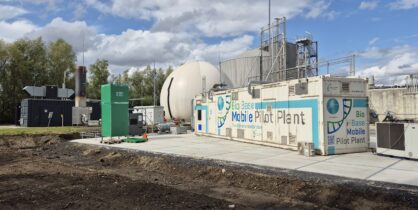
FUELPHORIA brings together demonstration projects across Europe to produce advanced biofuels and RFNBOs from a range of feedstocks. In one case, organic urban waste is converted into ethanol and methanol for use in road transport. In another, a biogas plant uses microorganisms such as algae to produce biodiesel. The overarching goal is to build sustainable value chains for advanced biofuels and RFNBOs by connecting feedstock suppliers, technology providers, and end-users.
“Each demonstration faces its own challenges – from feedstock quality to hydrogen availability,” Kostis Atsonios, FUELPHORIA’S Project Coordinator told REVOLVE. “The biggest barrier is making these processes both technically feasible and economically viable at full scale.”
For González Byass, this work builds on a decade of clean-energy innovation. Since 2014, the company has been producing green hydrogen – hydrogen made through the electrolysis of water powered by renewable electricity – as part of a LIFE Rewind Project, which installed Spain’s first privately owned hydrogen refuelling station.
One of the greatest challenges for advanced biofuels and RNFBOs is consistency. “Working with waste means working with uncertainty,” said Atsonios. “You never get the same composition twice – different branches, different prunings, different plants. Stability in feedstock quality is one of the toughest technical hurdles.”

This year, Viñas del Vero captured around 17 tonnes of CO₂, purified it to 99.95% purity, and compressed and stored 40,000 litres at high pressure – ready for reuse or conversion into methane. The project is done in close collaboration with the University of Rovira i Virgili, Tarragona, and CIRCE, a Zaragoza-based technology centre developing sustainable energy solutions.
The first production of methane is set to begin soon, and José María is optimistic. “We are just one winery – there are 4,000 in Spain. If we manage to encourage some of those other 4,000 to join in because they see that it’s possible, then that would be a major achievement.”
The tricky road to decarbonisation
The road transport sector is complex – and so is decarbonising it. There is no single pathway to clean mobility. Electrification, hydrogen, and renewable fuels each have a role to play, complementing one another across regions, vehicle types, and infrastructure realities. Renewable methane made from grape fermentation will not replace fossil fuels overnight, or alone, but it offers a glimpse of what is possible: turning waste into energy, cutting emissions, and providing practical, transitional solutions that work with the systems we already have.
If you want to go fast, go alone; but if you want to go far, go together.
José María Ayuso Rodríguez, Manager of Vineyards and Projects, González Byass
Road transport is an industry that affects all of us, and progress will depend on collaboration. Producers, policymakers, industries, and communities must work together to scale what works, share what is learned, and bring all of Europe along in a fair transition of decarbonisation. As José María told REVOLVE, “if you want to go fast, go alone; but if you want to go far, go together.”

From the same series
Join Planet
REVOLVE today
We strive to communicate sustainability for a better world for the next generations.
Support us by becoming a member of REVOLVE Planet today.
Become a Member