
Watt’s Next: Electrification as Europe’s Competitiveness Strategy
Europe’s climate ambition is clear. Whether it delivers now depends on grids, industry and transport, experts argued at the Electrification Alliance’s event.
At a moment when Europe faces weakening electricity demand, rising geopolitical tensions, and an urgent need to revive industrial competitiveness, the “Watt’s Next EU” event organised by the Electrification Alliance on 9 December 2025 brought together policymakers, industry leaders and energy analysts to chart a practical path for Europe’s electrified future. The discussions were forward-looking and unusually aligned: the technologies exist, the economics increasingly make sense, and the missing link is rapid implementation — especially on grids, permitting and taxation.
The event gathered senior voices including Laurence Tubiana, CEO of the European Climate Foundation, Adrian Hiel, Director of the Electrification Alliance, members of the European Parliamant (MEPs), industry experts, and national representatives. The European Commission’s grid package, which was released just a day after the event, loomed over the discussion as a decisive milestone. One of the event’s key moments was the launch of the Electrification Staircase, a new tool mapping which sectors and use cases can electrify first, unveiled by Adrian Hiel and Michael Liebreich.
Electrification as Europe’s industrial backbone
In her opening remarks, Laurence Tubiana underscored Europe’s paradox: while the continent is rich in renewable potential, electricity demand is stagnating. “We have to nurture demand,” she argued, framing electrification not only as a climate imperative but an industrial one. According to Tubiana, electrification can create more jobs than fossil fuel production and keep economic value within Europe. According to her, staying the course on 2025 and 2030 targets is essential to give clarity to companies already investing in the climate transition.
Electrification can create more jobs than fossil fuel production and keep economic value within Europe.
Laurence Tubiana, CEO of the European Climate Foundation
Tubiana stressed that Europe has the tools, capacity and technology to make electrification the engine of its economic strategy. “Electrification of the economy powers Europe,” she concluded — a theme that resonated throughout the day.
The missing link: implementation, not ambition
Adrian Hiel framed the discussion in two “acts” of the climate transition. Act I, he said, transformed Europe’s transport sector — electric vehicles are now mainstream. Act II is about bringing clean, abundant, low-cost European electricity into businesses and industry.
“The key message is implementing the legislation we already agreed with,” Hiel emphasised. With technologies now mature and cheaper than fossil alternatives, the focus must shift to enabling people and companies to actually use clean electricity, including through supportive grids, incentives and market rules. The Electrification Alliance represents the full chain, generators, grid operators, industrial users, and all share the urgency: electrification is no longer a climate silo, but the intersection of security, competitiveness, and resilience.
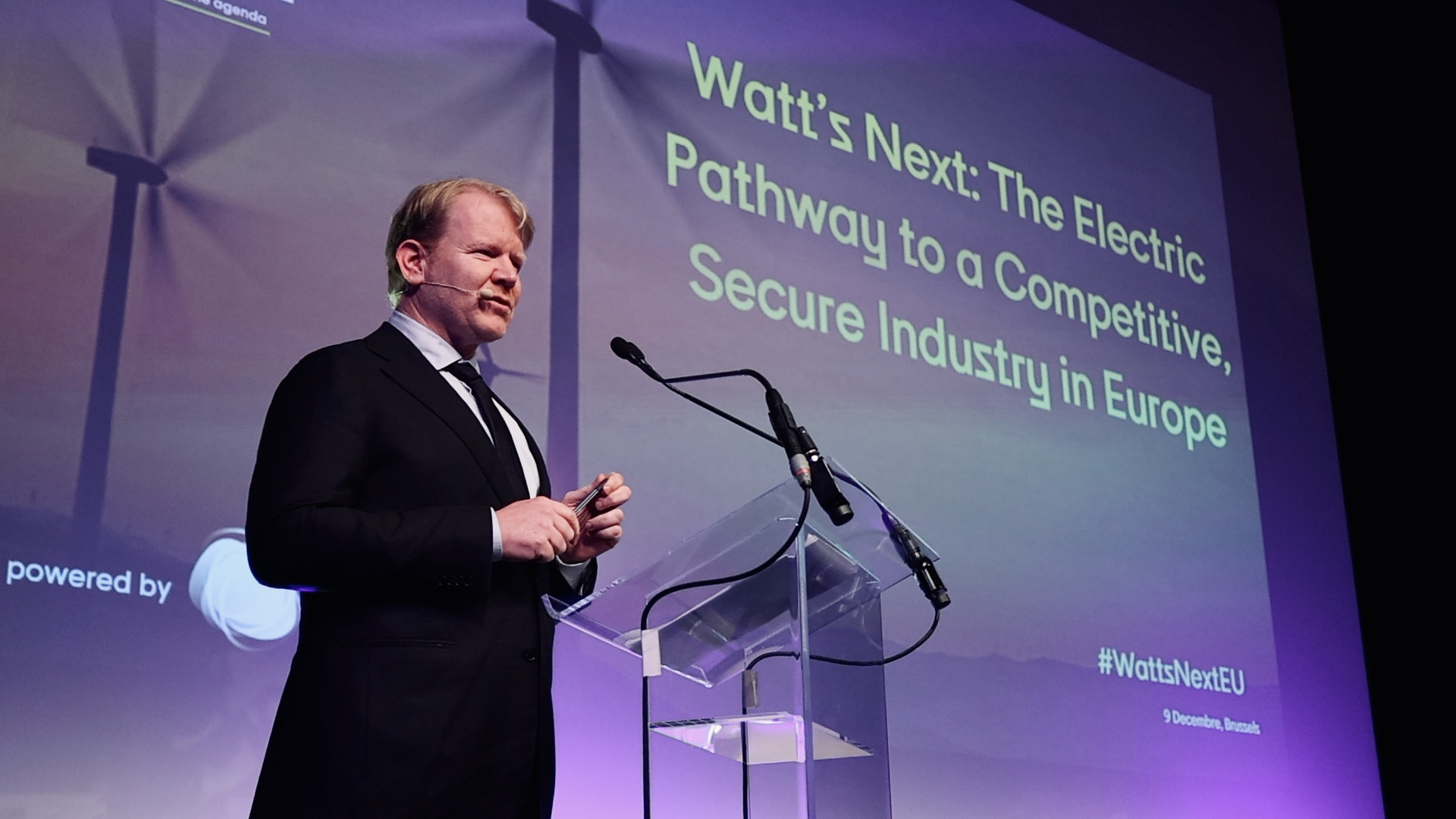
Europe’s energy dependence and the electrification gap
Kingsmill Bond, Energy strategist at EMBER, reminded the audience of Europe’s fundamental strategic vulnerability: heavy dependence on imported fossil fuels. Although renewable electricity has expanded rapidly, electrification of final energy demand has remained stagnant for more than a decade. This stagnation prevents Europe from capturing the full benefits of its increasingly affordable renewable power.
Bond stressed that electrotechnologies are now cheaper than fossil alternatives, and the potential for electrification is both large and rising. Moving to domestic renewables and electrification dramatically reduces energy dependency: “When fossil flows stop, the economy stops. When electrotech flows stop, only growth is at risk.” His message was clear: optimise the energy system for price, not carbon, stop wasting money on “fake solutions,” and use the technologies that already have “the wind at their back.”
We import 60% of our energy.
Kingsmill Bond
MEP Seán Kelly of the EPP Group of the European Parliament echoed the link between electrification and geopolitics. For Kelly, the lesson is clear: electrification is energy security. “The more we electrify transport, the more we can power the rest of the economy,” he said, calling for Europe to “put a plug on everything we can put a plug on.”
The more we electrify transport, the more we can power the rest of the economy.
MEP Seán Kelly, EPP, European Parliament
A major bottleneck is the electricity grid. With grid construction taking 10–12 years, current timelines are incompatible with Europe’s 2030 goals. “Without grids, there is no electrification,” Kelly warned.
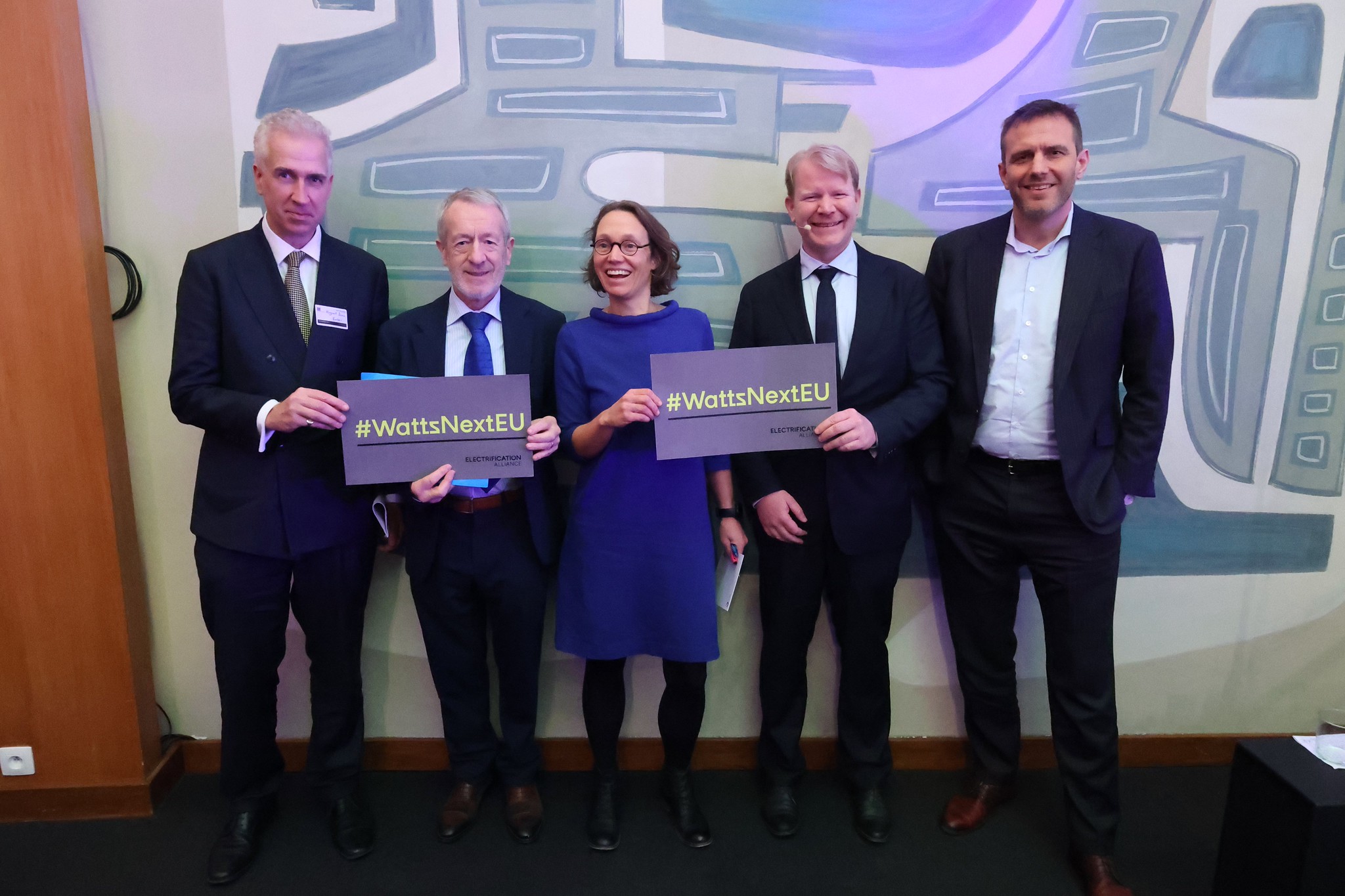
Kristian Ruby Secretary General at Eurelectric, pointed to three pillars: better implementation, improved governance, and smart financial incentives. Permitting remains too slow, and electricity taxation in some Member States remains disproportionately high, undermining competitiveness. He highlighted the 11 recommendations of the Electrification Alliance, with grid modernisation and fairer energy taxation among the most urgent.
Frauke Thies, Co-Director at Agora Energiewende, emphasised the growing readiness of solutions for buildings and transport, and the significant opportunity in low-temperature industrial heat, where electrification is already cost-competitive. Infrastructure planning, however, is often oversized and poorly integrated. She underscored the importance of the European grid package, which will be released on 10 December, and called for both CAPEX and OPEX support for electrification investments.
Making electrification pay
Electrification must be reframed as an industrial strategy, argued Chiara di Mambro, Climate Change and Energy Policies Advisor at ECCO. Europe’s competitiveness depends on rebalancing the electricity-to-gas price ratio and ensuring that revenues from ETS1 and ETS2 are better used by Member States. “We need to create a business case,” she said. Many Member States fail to reinvest carbon revenue properly, undermining the very transition they committed to.
Rossen Ivanov, Managing Director at Armstrong International, pointed out that electricity prices vary dramatically across Europe, shaping industrial investment decisions. Nordic countries benefit from abundant renewables, while others lag. Companies are now quieter about “net zero” due to fear of greenwashing accusations, but the structural need for electrification remains.
Jozefien Vanbecelaere, Policy Director at EHPA highlighted the strong momentum behind heat pumps, a sector with roughly 50 headquarters located in Europe — a strategic industrial asset. For her, long-term policy clarity and absence of new administrative burdens are essential.
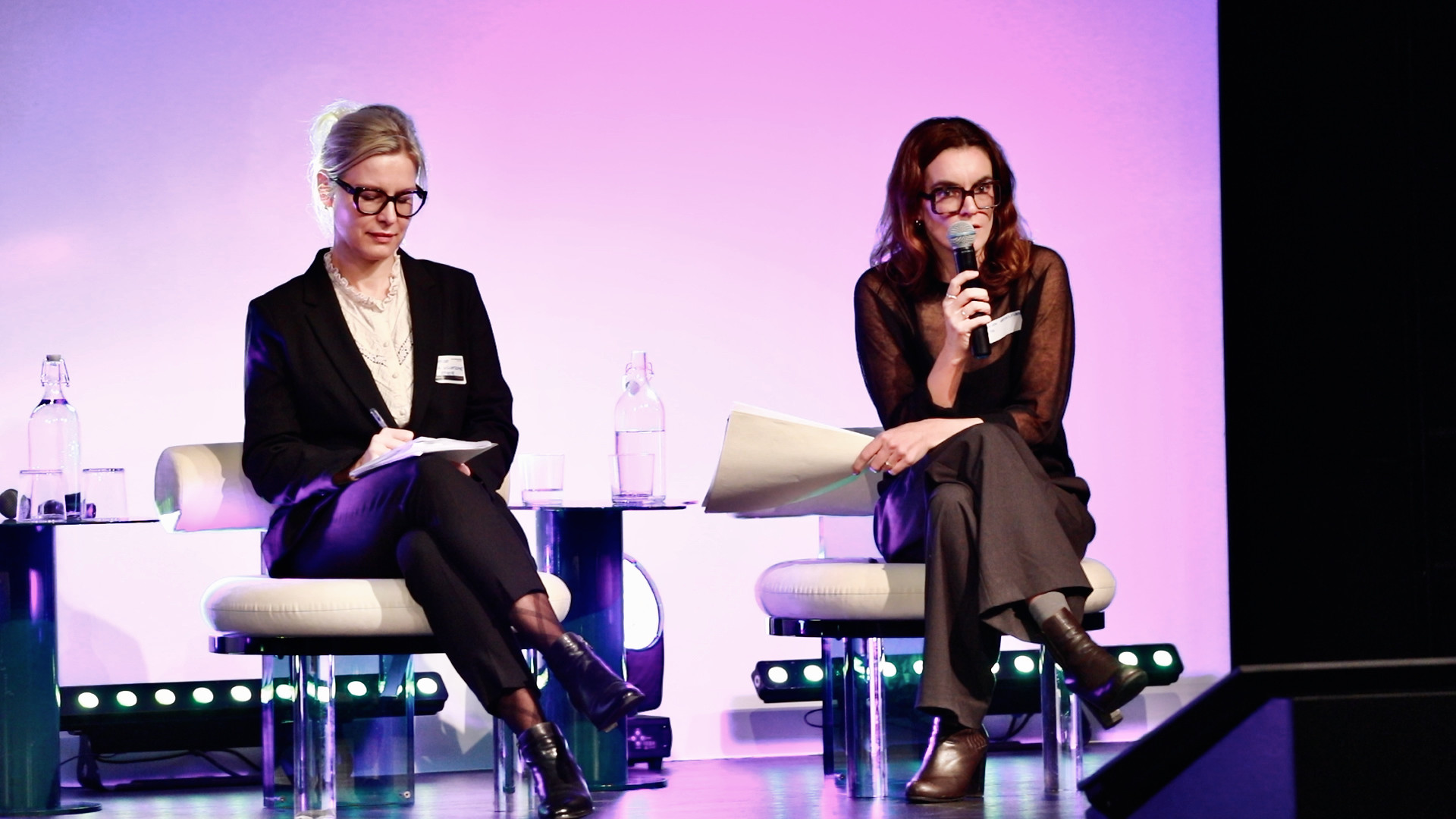
Lelde Kiela-Vilumsone from DG ENER of the European Commission clarified that the forthcoming Electrification Action Plan will focus heavily on implementation, flexibility mechanisms, and supporting SMEs, including through EU cohesion funds. Ensuring sufficient electricity supply for sectors like agrifood is also on the agenda.
What electrifies first? The Electrification Staircase
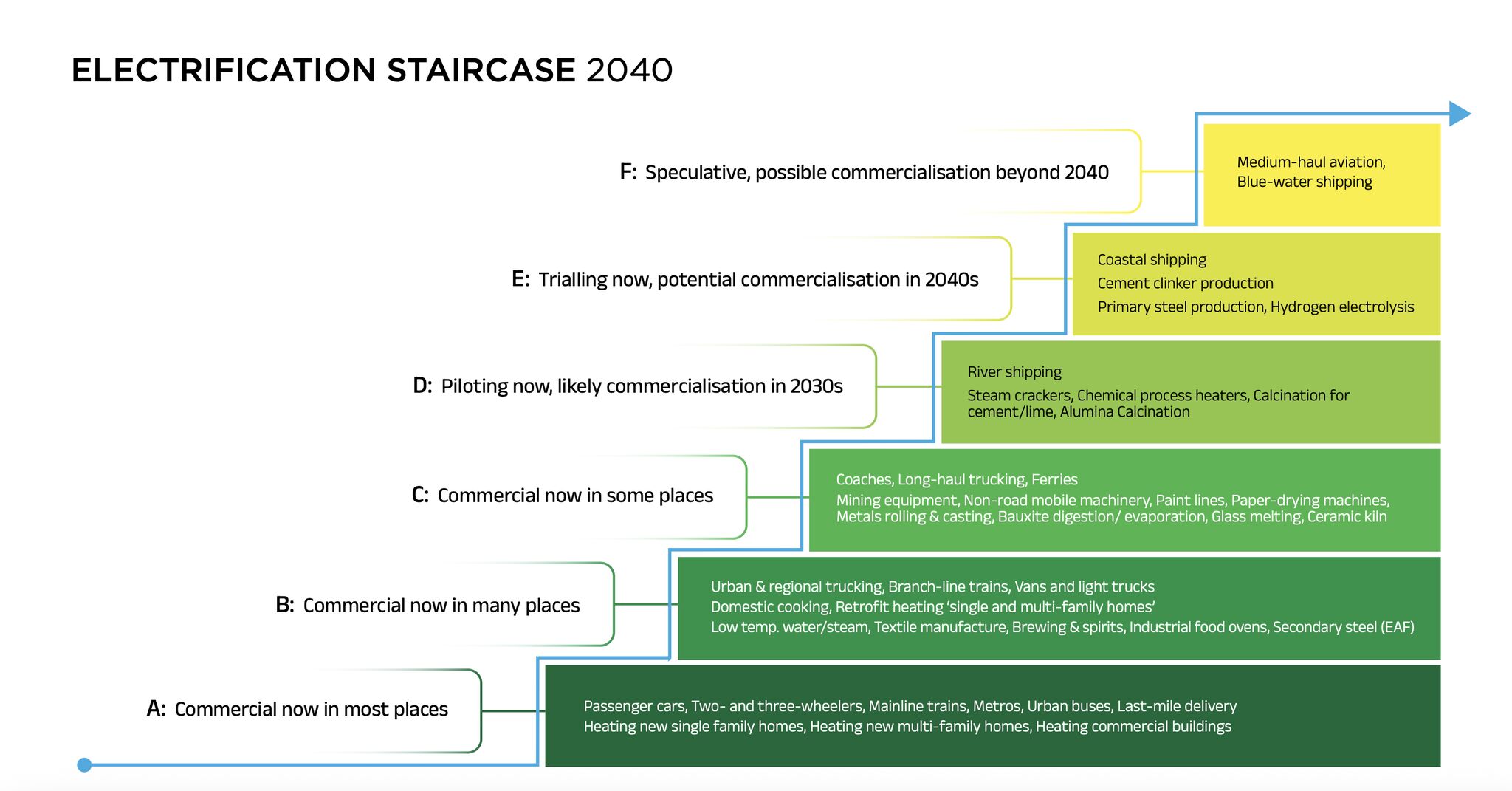
The afternoon started with the launch of the Electrification Staircase presented by Michael Liebreich and Adrian Hiel. Inspired by the Hydrogen Ladder, this tool visually maps which sectors and use cases can electrify first, based on commercial readiness and cost-effectiveness. The bottom rungs: A, B, and C represent use cases that are already cost-competitive and require little to no subsidy.
The staircase is meant to focus policymakers on use cases first, not abstract supply targets. It introduces a time dimension, clarifying what can scale immediately and what requires more innovation or infrastructure.
Insights from the Parliament
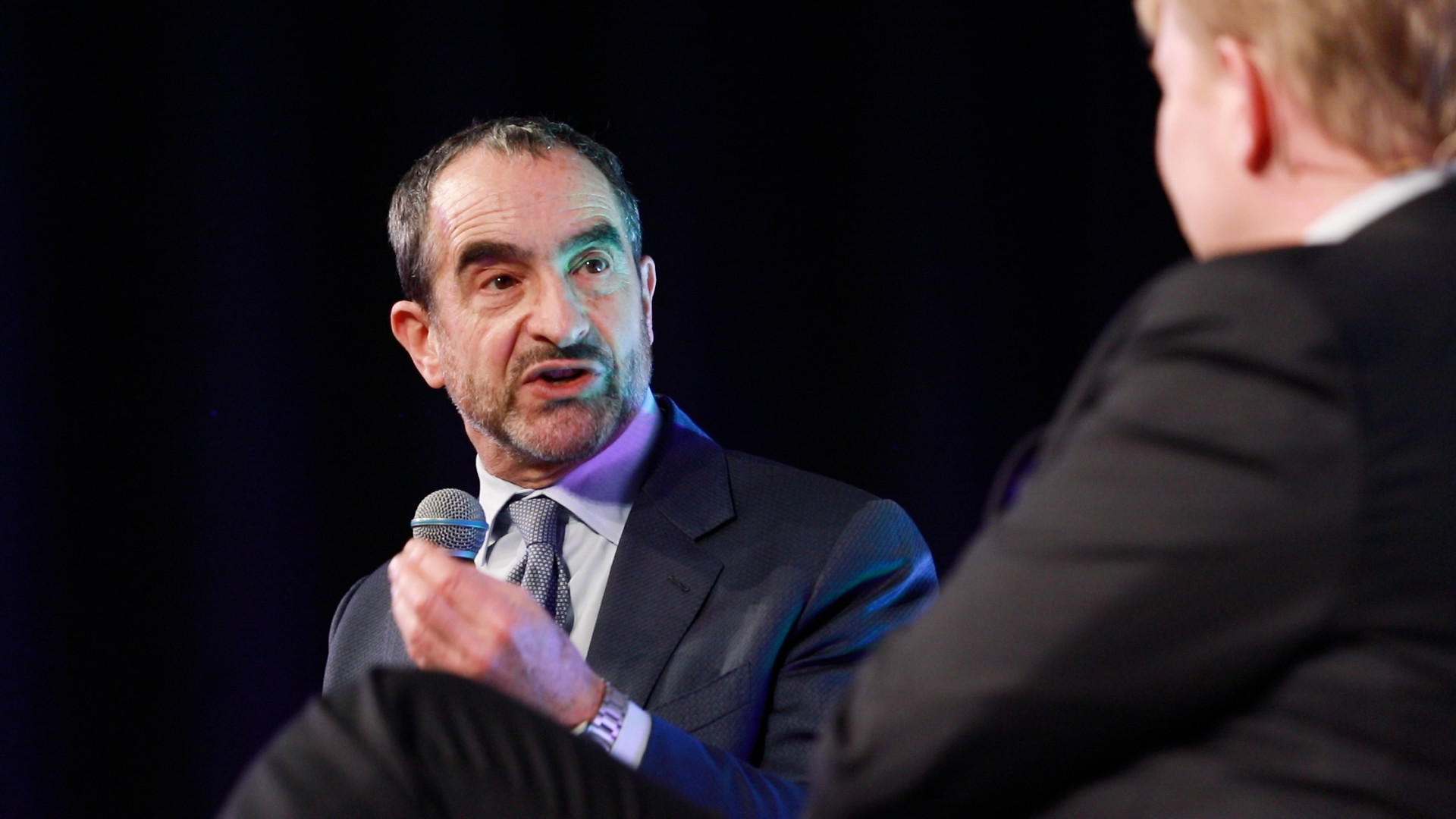
MEP Paulo do Nascimento Cabral of the EPP , opened his intervention with a stark reminder: the next phase of Europe’s electrification agenda hinges not on Brussels, but on the Member States. While the European Parliament has endorsed an ambitious package of measures, many were adopted under significant time pressure, and several governments may now struggle to translate them into national legislation. When the Commission’s new Grid Action Plan will be released, he argued, the responsibility for delivery shifts decisively to national capitals — where the real constraints of infrastructure, pricing, and regional disparities come into play.
He pointed to one of Europe’s most pressing bottlenecks: ageing electricity grids, many of them around 40 years old. This, combined with persistently high energy prices, helps explain why only about 10% of energy-intensive industries are currently betting on electrification. For him, that figure is a warning sign that confidence remains low, and that Europe risks missing a major competitiveness opportunity.
Security, industry and simplification: key takeaways
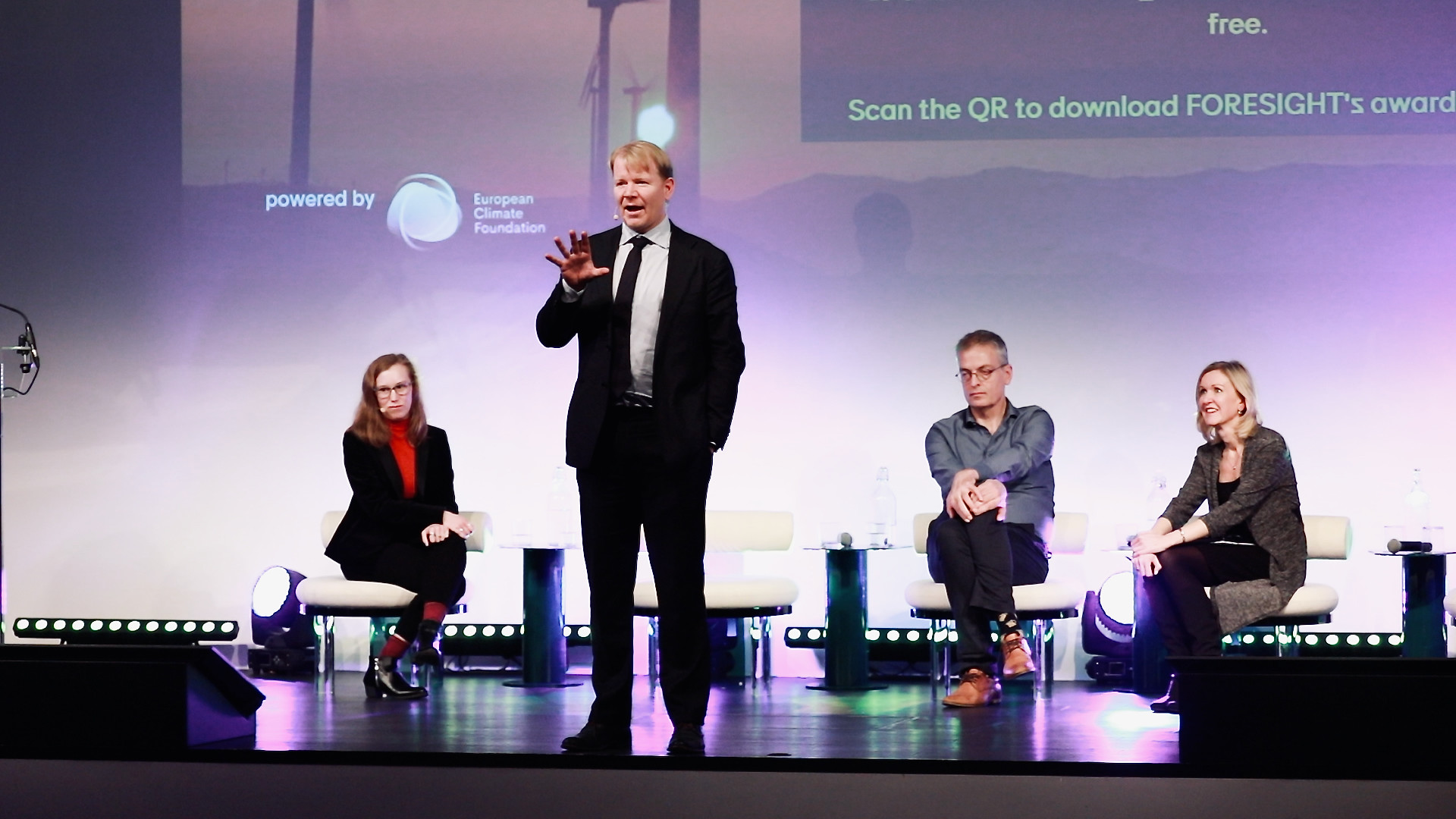
The day concluded with a podcast recording session for the FORESIGHT Climate and Energy, hosted by Kira Taylor. The dialogue highlighted three themes:
- Deployment is working, but industry is not keeping up
Solar, wind, batteries and mobility are advancing, but heating remains the glaring gap. Europe has no coordinated policy to ensure a gradual shift to electric heating, noted Jos Dings, Independent Cleantech Expert.
- Industrialisation matters as much as deployment
Ann Mettler, Distinguished Visiting Fellow at the Center on Global Energy Policy, Columbia University, stressed that Europe must not only deploy clean technologies but also manufacture them, to avoid swapping fossil dependence for cleantech dependence – particularly on China.
- Electrification is now a security and defence issue
Energy security can no longer be defined solely as access to fossil fuels. Electrification is now linked to geopolitical resilience, economic coercion risks, and defense readiness.
All speakers agreed: Europe does not need more targets, but simplification, faster permitting, and smarter governance.
A decisive moment for Europe
Across all panels of the day, one message was consistent: Europe has the technology, the industrial base, and the policy framework to electrify large portions of its economy, but implementation is lagging. The newly published European Grids Package and the Electrification Action Plan, expected in early 2026 are therefore seen as pivotal.
Electrification is no longer simply a climate objective. It is emerging as Europe’s most realistic strategy for competitiveness, energy security, and industrial leadership. This is the decade in which Europe can shift from energy dependence to energy leadership.