Geneva’s Air Inequality: Who Breathes the Dust?
New research reveals how Geneva’s wealthiest residents generate most car pollution while low-income neighbourhoods bear the impacts.
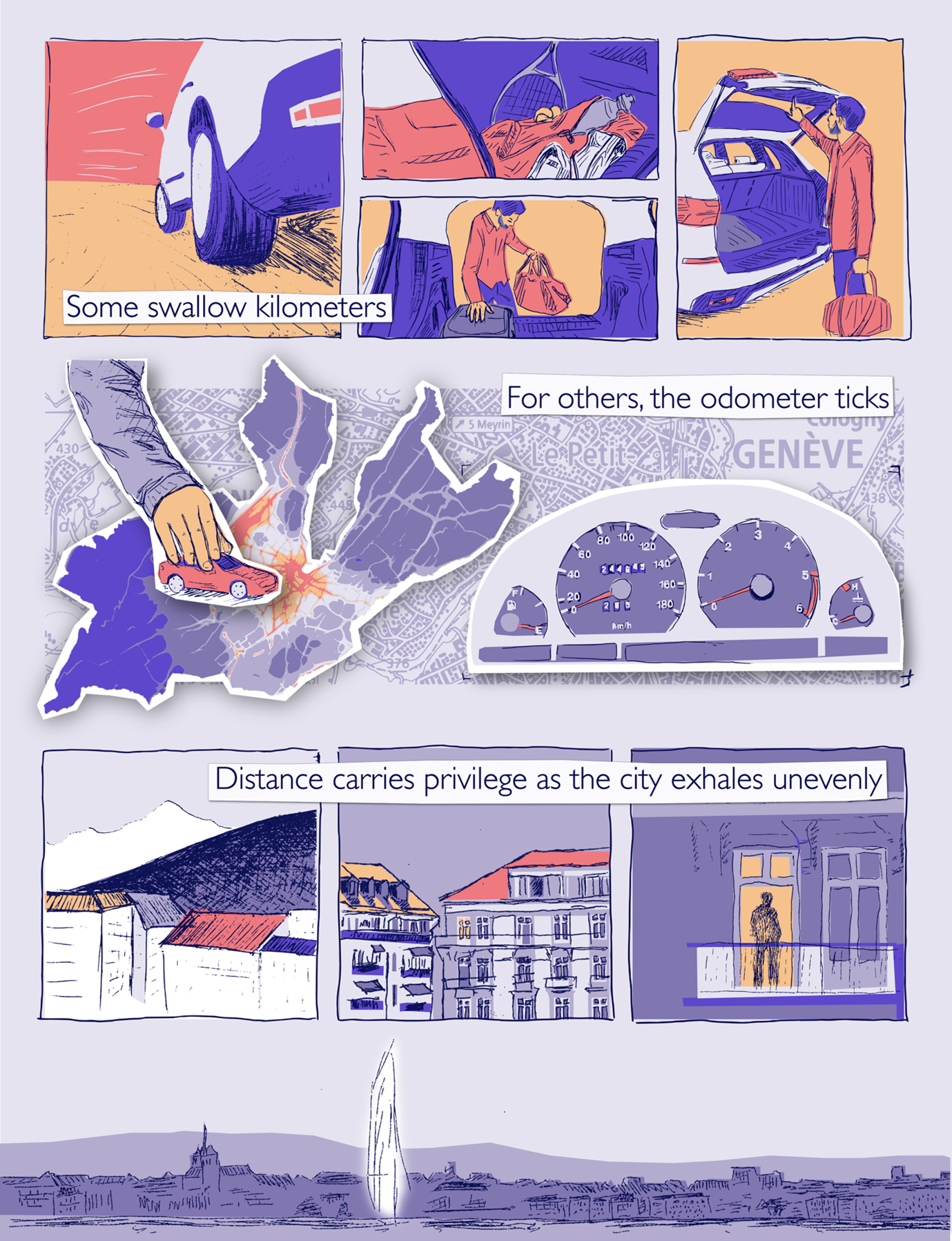
Car use is often framed as a social equity issue: politicians argue that restricting it punishes the poor. Their assumption is that vulnerable families rely heavily on old, polluting cars, while the well-off can afford to give them up. In Geneva, however, the numbers tell a different story.
At 6t bureau de recherche, we analysed mobility data, car ownership, pollution exposure and socio-economic indicators across Geneva’s neighborhoods. We found that the wealthiest Genevans use their car most frequently and hence are at the source of the largest share of car-related pollution. These fumes and noise hit hardest in poor neighbourhoods.
Cars as class markers
Half of the poorest households in Geneva own no car at all. In contrast, one in three high-income families own more than one car. The wealthiest families also drive newer, heavier and more powerful vehicles. These cars are often more polluting because of their weight and power. However, the age effect offsets this slightly as newer cars are often cleaner.
Who drives most?
The poorest travel on foot for half of their daily trips. If they use the car, it is mainly for groceries, care or family obligations. Every three trips, the wealthiest leave the house by car, mainly to commute to work or for leisure. This means that the poorest residents of Geneva not only drive less often, but also use their cars for more essential trips.
How far do they drive?
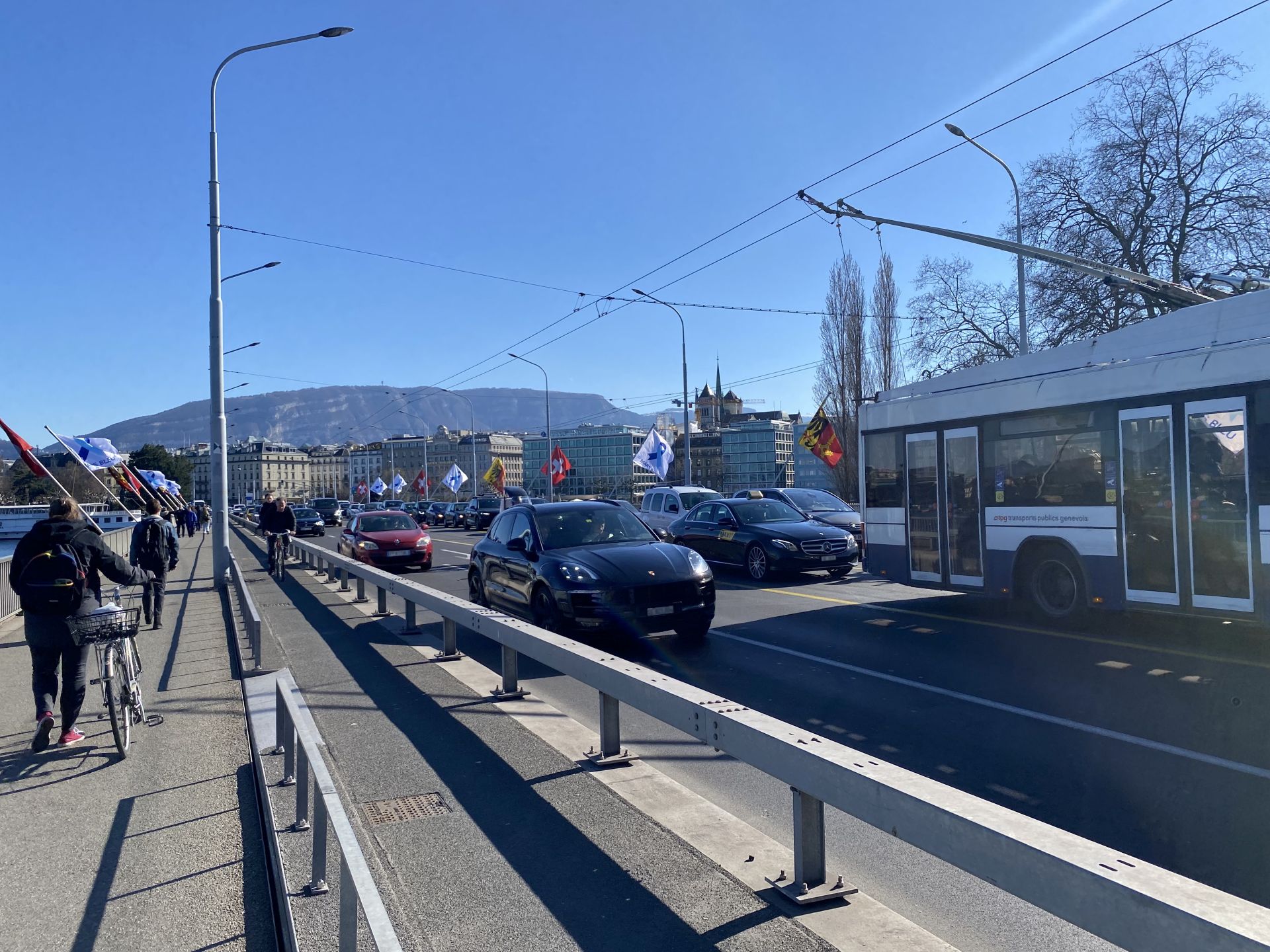
Wealthier households drive about 44 km per day, giving them time to sing along to 15 songs on the radio. Meanwhile, poorer families drive an average of 32 km per day, or 5 songs less. This reflects the impact of financial constraints, access to cars, urban planning, and preferences characteristic of the different socio-economic groups.
Who pollutes most?
Because they travel farther in bigger, heavier and more powerful vehicles, wealthy Genevans pollute far more. Wealthier people emit twice as much particulate matter, three times as much nitrogen oxides and more than double the CO2 of the poorest. Interestingly, this means that the effect of older, more polluting cars among the poorest is overridden by the effect of power and weight of their cars and of distance traveled by the wealthiest.
Wealthier people emit twice as much particulate matter, three times as much nitrogen oxides and more than double the CO2 of the poorest.
And who suffers most from this pollution?
Not the rich. The poorest neighbourhoods endure the highest pollution exposure. At night, background traffic noise is as loud as a washing machine, and during the day as a constant conversation. Meanwhile, in the most affluent neighborhoods, night-time background noise is as quiet as whispers. There, the air also carries up to one and a half times less nitrogen dioxide than in Geneva’s underprivileged areas.
Inequality on wheels
The people who drive least are the ones who suffer most. Those who drive most generate the greatest harm, but to not have to breathe polluted air or endure noisy nights.
The people who drive least are the ones who suffer most.
The numbers are clear in Geneva: car restrictions are not an unfair burden on the poorest. On the contrary, the poorest stand to gain the most from car use restrictions, as they are currently suffering the worst pollution while relying least on cars.
It is time to erase the myth that the poor are responsible for the largest share of emissions. In Geneva, it is the wealthiest who cling to their vehicles and everyone else pays the price.
A cleaner future for Geneva lies in smarter choices: taxing heavy, powerful cars, pricing mobility fairly, slowing traffic where noise hits hardest, or supporting low-income households to replace old, polluting vehicles or shift to cleaner alternatives.
This article is based on research conducted by Sébastien Munafo, Fabrice Zobele, and Fien De Doncker at 6t bureau de recherche.