
Europe’s Renewable Hydrogen Reality Check

Renewable hydrogen could secure Europe’s climate goals, energy independence, and industrial future, if policy catches up with ambition.
As Europe races to decarbonise while navigating geopolitical instability, renewable hydrogen is increasingly framed as a strategic solution for hard-to-abate sectors. Ileana Okumuş is Policy and Communications Officer at the Renewable Hydrogen Coalition, where she works on EU regulation, advocacy, and policy communication. With a background in international politics and energy policy, she sits at the intersection of industry ambition and political reality. In this conversation, Okumuş explains what renewable hydrogen is, where Europe stands on it, and what must change for the sector to succeed.
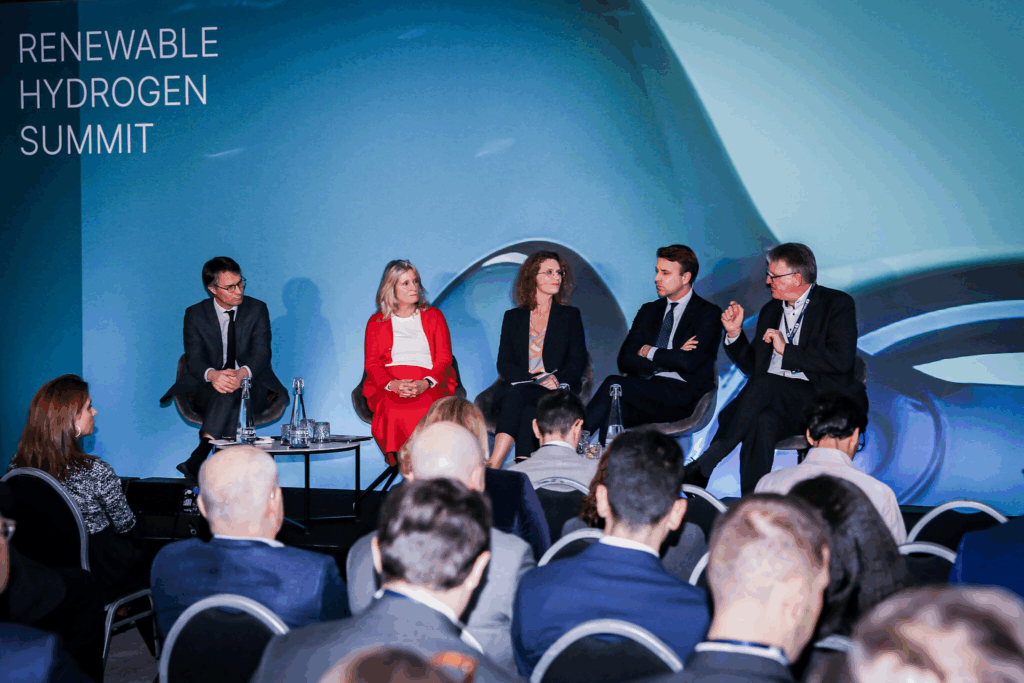
You’ve been working at the Renewable Hydrogen Coalition for several months now. Earlier this month, you hosted your Renewable Hydrogen Summit. How did it go?
It went very well, based both on participation and feedback. The summit is our flagship event, and this year we managed to bring together strong representation from both industry and policymakers. We covered almost the entire renewable hydrogen value chain in one day, from electrolysers and infrastructure to priority lead markets, such as steel and other hard-to-abate industrial uses, as well as end-use sectors including shipping and aviation, alongside discussions on funding mechanisms.
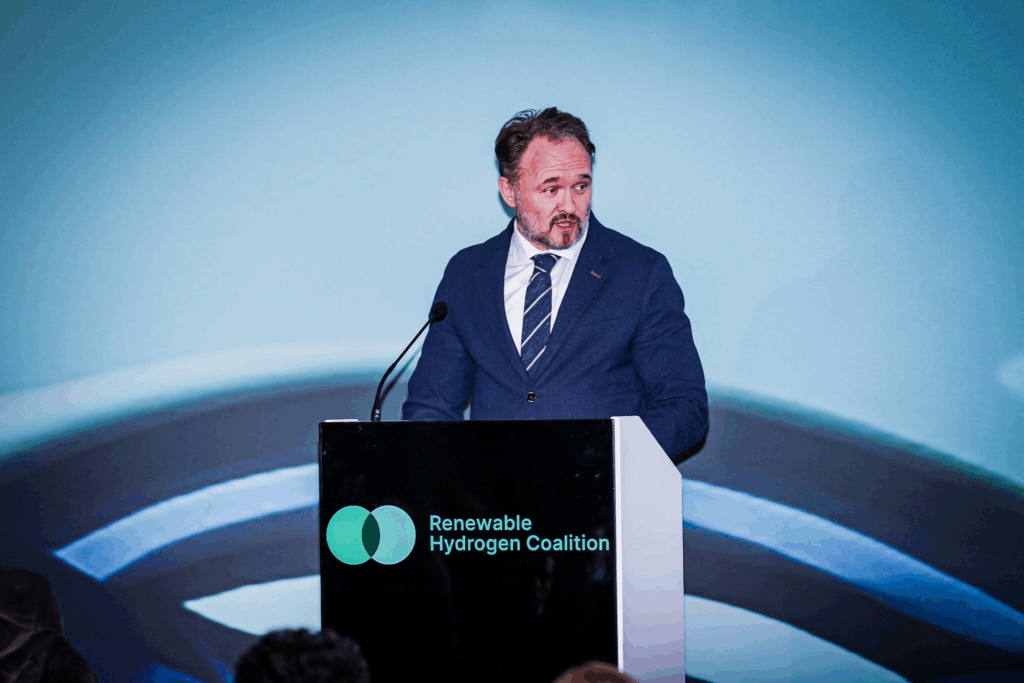
We also had Commissioner Dan Jørgensen in attendance, which was particularly important. Our co-chairs presented a declaration directly to him, followed by his response. That exchange showed something essential: industry and policymakers are broadly aligned on the role renewable hydrogen must play in Europe’s decarbonisation. The challenge now is moving from alignment to implementation.
For listeners who are new to the topic, what exactly is renewable hydrogen, and how is it different from “green hydrogen”?
Hydrogen is often discussed using colour label: green, blue, grey, pink, but we prefer the term renewable hydrogen because it is more precise. Renewable hydrogen is produced by splitting water into hydrogen and oxygen through electrolysis, using renewable electricity from sources such as wind and solar.
This distinction matters because electrolysis can technically be powered by non-renewable electricity as well. What we are advocating for is hydrogen that is fully aligned with climate objectives, meaning both the production process and the electricity source are renewable.
Renewable hydrogen matters for three main reasons. Firstly, decarbonisation. The EU aims to reach net zero by 2050, and while electrification should be prioritised wherever possible, some sectors, like steelmaking, shipping, and aviation, are extremely difficult to electrify. Renewable hydrogen is essential there.
Secondly, energy security. Europe is not rich in fossil fuels, and since Russia’s invasion of Ukraine, energy dependence has become a security issue. Renewable hydrogen can help Europe reduce reliance on imported fossil fuels and increase energy sovereignty.
Thirdly, industrial competitiveness. Europe currently has a technological edge in electrolysis and renewable hydrogen regulation. We were the first to define what renewable hydrogen is and to build a regulatory framework around it. Maintaining that leadership is crucial.

Some argue hydrogen is overhyped. Can renewable hydrogen really “save” Europe in this geopolitical moment?
I would not say there is one single technology that can save Europe. Renewable hydrogen is not a silver bullet. But it is indispensable for achieving our climate and energy goals in specific sectors.
What is important to stress is that hydrogen should be used where it makes sense. It should not replace direct electrification where electrification is feasible and efficient. But for hard-to-abate sectors, renewable hydrogen is not optional, it is necessary.
Europe launched its hydrogen strategy five years ago. Is the EU truly prioritising renewable hydrogen today?
From a legislative perspective, yes. Europe was first to define renewable hydrogen and put binding rules in place. Other regions are now looking to EU regulation as a reference. The creation of the European Hydrogen Bank also sent a strong signal that hydrogen is a strategic priority.
However, regulation alone is not enough. Many member states have still not transposed EU rules into national law. Without transposition, projects stall, investors hesitate, and demand fails to materialise. This gap between EU ambition and national implementation is one of the sector’s biggest bottlenecks.
Where does Europe stand today in terms of hydrogen production and infrastructure?
Today, around 600 megawatts of electrolyser capacity are operational in Europe, with about three gigawatts under construction. That falls far short of the EU’s target of six gigawatts by 2024.
The industry itself is ready. Electrolyser manufacturing capacity has increased dramatically, from around one gigawatt to roughly ten gigawatts in just a few years. The problem is not supply, it is demand creation, infrastructure, and policy certainty.
Projects are being delayed or cancelled due to lack of infrastructure, because rules are unclear, or because buyers are unwilling to pay the price premium. Without a functioning market, production cannot scale.
That price gap seems central. Who should close it: governments, industry, or consumers?
There is no single solution. Public procurement is one of the most powerful tools available. Governments can create demand by purchasing materials, such as steel, produced with renewable hydrogen. This helps close the price gap and sends a strong market signal.
Binding quotas, lead markets, and preferential taxation for green products are also important. When renewable hydrogen is used upstream, for example in steelmaking, the price increase for end products like cars or buildings is relatively small. Studies show that a car made with green steel might cost only around one percent more.
Electricity prices are another critical issue. Electricity accounts for up to 70 percent of renewable hydrogen production costs. As long as renewable electricity is taxed more heavily than fossil fuels in some member states, the cost gap will persist.
Renewable hydrogen relies heavily on public subsidies. How do we ensure public money delivers public value?
First, it is important to remember that fossil fuels are still heavily subsidised, often indirectly. Renewable hydrogen is not uniquely privileged in this regard.
That said, subsidies should not be permanent. The goal is to reduce the cost gap and allow the market to scale. The European Hydrogen Bank is a good instrument, but its budget is currently insufficient. Closing the gap effectively would require around €6–8 billion per auction, far more than what is currently allocated.
Public money must be tied to clear conditions: emissions reductions, industrial resilience, and long-term competitiveness. If designed well, these investments can strengthen Europe’s economy rather than distort it.
Will households end up paying more for energy because of renewable hydrogen?
No. We do not advocate using renewable hydrogen in households. That would be inefficient. Homes should be electrified directly wherever possible.
Renewable hydrogen is meant for sectors that cannot easily electrify. While this may slightly increase prices in areas like aviation or heavy industry, the impact on consumers is likely to be limited, and far outweighed by the benefits of climate stability, energy security, and industrial resilience.
If Europe gets this right, what could a renewable hydrogen future look like?
For me, it is about getting rid of fossil fuels in sectors where alternatives are limited. This requires a system-change mindset. We are asking traditional industries to fundamentally transform how they operate, and that is not easy.
But we have the technology, the knowledge, and the opportunity. Renewable hydrogen can power European industry, decarbonise shipping and aviation, and reduce emissions we already feel the impacts of every day. Some of these benefits cannot be priced, but they are essential.
Finally, if you had one point to make with Ursula von der Leyen, what would it be?
Europe has a unique opportunity to protect its living standards, democratic values, and industrial competitiveness while achieving energy independence, by supporting electrification and renewable hydrogen with bold, consistent policies.