Testing the Waters
Europe’s water shortages are spurring the cross-border transfer of farming innovations.
Catalan authorities loosened water use restrictions in April 2025 after a wet winter and spring returned the region’s reservoirs and basins to healthier levels. A sigh of relief for citizens? Perhaps temporarily. The period of historic drought in Catalonia served as a palpable warning that challenges are set to multiply as urban demand, tourism, agriculture, and industry all vie for water in a hotter, drier climate.
What’s the difference between drought and water scarcity?
A meteorological drought is a prolonged lack of precipitation, while scarcity (also known as hydrological drought) refers to there not being enough water available for all the different things we use it for.
Water scarcity can be gauged by means of the water exploitation index (WEI), an indicator that reflects the pressure on resources of fresh water and measures annual water consumption as a proportion of the total available.
Source: CREAF
Drought has changed the way people talk about and value water in Catalonia (and indeed Spain more widely). Reclaimed wastewater, once associated mainly with industrial use, is increasingly viewed as a solution in areas involving direct human consumption. Yet such proposals leave a sour taste in the public’s mouth.
A 2025 survey by the Elcano Royal Institute, a leading Spanish think-tank, found that while more than 80% of Spaniards support using reclaimed or desalinated water for non-potable purposes such as irrigation, industrial processes, or urban cleaning, only 39% would accept reclaimed water for cooking and just 25% for drinking. Acceptance rises to 63% and 43%, respectively, when it comes to desalinated water.
Even with high regulatory standards and proven safety, there is a persistent psychological barrier. This “yuck factor”, as researchers call it, illustrates that technological readiness alone cannot guarantee adoption, and that public trust must be built alongside pipes and filters.
…technological readiness alone cannot guarantee adoption, and that public trust must be built alongside pipes and filters.
Agriculture accounts for an estimated 65% of all water usage in Catalonia, according to the Catalan regional government, which makes the sector fertile ground for innovation as authorities ponder ways to rethink how the increasingly precious resource is managed.
Reimagining water’s second life
At the European level, regulation on minimum requirements for water reuse entered into force on 26 June 2023 across most Member States. The then Commissioner for Environment, Oceans, and Fisheries Virginijus Sinkevičius said at the time that the new standards meant “consumers and farmers can be confident in the quality and safety of agricultural produce irrigated with reclaimed water.”
The regulation establishes uniform standards for water quality, along with clear rules for monitoring, risk management, and public transparency. As of 2023, only 2.4% of total treated urban wastewater in the EU was being reclaimed and reused. Spain, one of the EU’s most water-stressed countries according to the European Environment Agency (EEA), has aligned national policy with the European framework.
Catalonia’s experiment in circular water
Catalonia has become an emblematic case for understanding how technology, regulation, and public perception intersect in Europe’s response to water scarcity. The region’s drought accelerated experimentation with advanced treatment systems and indirect potable reuse, positioning it as a testing ground for Europe’s circular water future, and for its social acceptability.
At the BETA Technological Centre at the University of Vic (BETA-VIC), researchers experienced this challenge directly through the RE-AQUA project, which demonstrated the feasibility of reusing wastewater from abattoirs and agro-industrial operations.
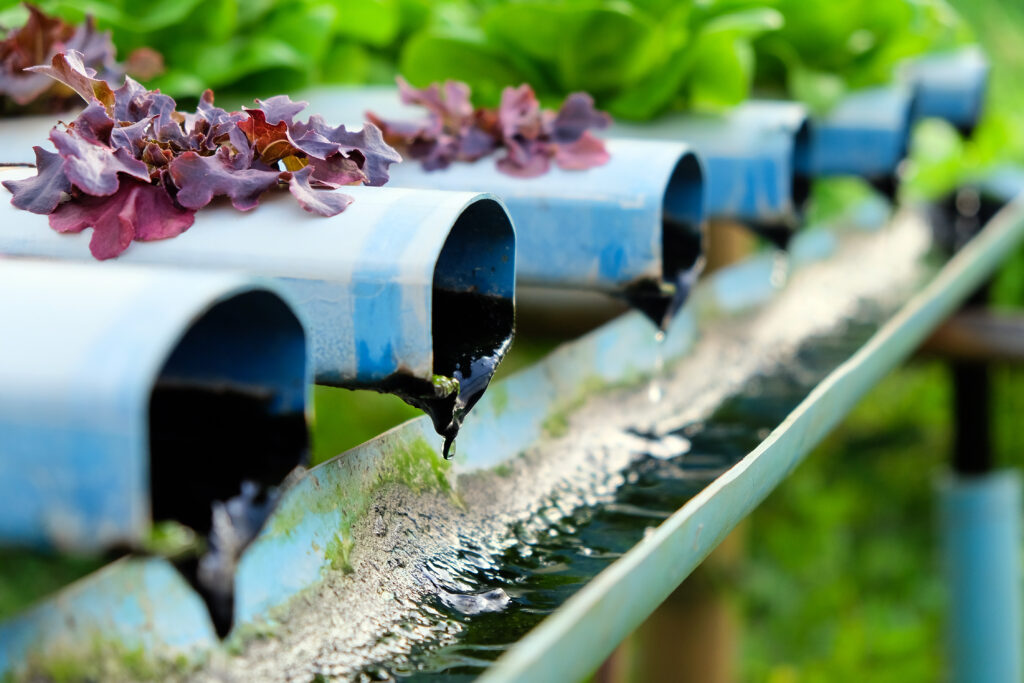
Speaking to REVOLVE, Esther Vega, Senior Researcher at BETA VIC, explained: “We framed reclaimed water as a high-quality resource rather than ‘reused wastewater’.” The project maintained constant communication with public authorities, the Catalan Water Agency, the Department of Health, and the Department of Climate Action, Food and Rural Agenda, to ensure that all information was reviewed and validated. “That transparency offered both technical and administrative assurance,” Vega added.
The project also confronted skepticism both from industry stakeholders and from public institutions wary of the food-related applications of reclaimed water. “We faced skepticism mainly from industry stakeholders concerned about product safety and regulatory liability,” says Alexandre Galí, BETA VIC’s Environmental Unit Coordinator. “From public or regulatory stakeholders, the concern was in the food-related applications that imply reuse water in indirect contact with food and the way to monitor the pollutants to verify water quality.”
From local practice to European amplification
Across Europe, water scarcity is becoming a major agricultural issue. Agriculture accounts for roughly 29% of water use in the EU, according to the EEA, although that figure can rise substantially in southern EU nations, reaching above 80% in Greece, studies have found.
Finding ways to grow food with less water, and reuse what is already available, is increasingly urgent. In Catalonia, projects such as RE-AQUA and its successor RE2AQUA are showing how local innovation can drive that change. Yet the real test lies in scaling these lessons beyond regional borders.
That is precisely what AQUAGRI-KNOW sets out to do. Funded by the EU and coordinated by BETA-VIC, the project brings together 13 organisations from five Member States to advance the circular water value chain, a model that rethinks how water moves through agriculture, from source to use and back again. Rather than treating water as a one-way flow, AQUAGRI-KNOW promotes a closed-loop approach: optimising water use, developing WaterSmart crops, enhancing the water-soil interface, and enabling water reuse.
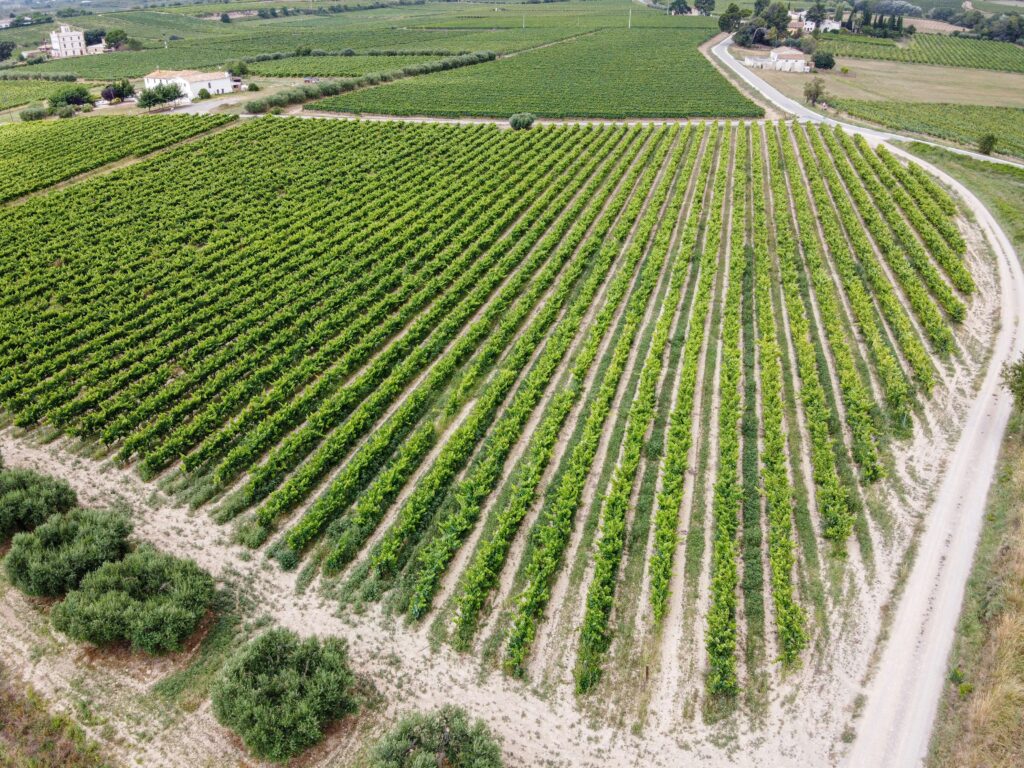
The project builds directly on the experiences of EIP-AGRI Operational Groups, which have tested innovative water-saving and reuse solutions across Europe. It collects and harmonises this knowledge, aligns it with EU and national policies, and transforms it into practical, farmer-friendly tools. These are then shared through workshops, peer-to-peer exchanges, and trainings led by the project’s Ambassadors Programme, a network of farmers and practitioners who act as multipliers of change in their local communities.
This way, AQUAGRI-KNOW ensures that successful Catalan models can inform water-stressed regions elsewhere, from southern Italy to eastern Poland, and acts as both amplifier and connector, bridging the gap between local experimentation and continental strategy.
Toward a circular water culture
AQUAGRI-KNOW draws its strength from real-world experience, connecting the lessons of 12 Operational Groups (OGs) from across Europe, including the likes of RE-AQUA and RE2AQUA. In Belgium, WaterReserve piloted drainage and rainwater infiltration techniques across test plots, proving that better rainwater conservation during dry periods can stabilise groundwater levels and reduce losses, though its success depends on local soil conditions and farmers’ willingness to manage higher water levels.
Another Belgian OG, Waterketen, explored the reuse of treated industrial wastewater from sectors like dairy, breweries, and food processing. By evaluating treatment technologies and nutrient content, the project created a practical framework for safely integrating reclaimed water into irrigation systems, improving sustainability while offering cost savings for both farmers and industries.
Elsewhere, other OGs are rethinking resilience from the ground up. In Poland, Nova Trawa developed a drought-resistant ryegrass variety enhanced through symbiotic endophytic fungi, a naturally modified alternative to genetic engineering that reduces dependence on plant protection products and water use. In southern Italy, InnovaLegumi reintroduced legumes into cereal rotations, improving soil fertility, nitrogen balance, and overall water efficiency while boosting yields and reducing reliance on synthetic fertilisers.
AQUAGRI-KNOW also focuses on what happens beyond the field. The project’s cross-visits and Ambassadors Programme bring together farmers, researchers, and policymakers, fostering direct exchange and trust across borders. Ambassadors act as local champions who adapt innovations to their specific contexts and show, through practice, that circular water management is both viable and beneficial. These exchanges are where policy meets reality, where a farmer in Belgium can learn from a Catalan pilot, or an Italian cooperative can share lessons with a Polish reuse initiative.
Healthier soils mean healthier water systems
Healthy soils are another cornerstone of AQUAGRI-KNOW’s circular water value chain. Soil is not just a substrate for crops, it is a living system that regulates moisture, stores carbon, and sustains biodiversity. Recognising this, the project supports OGs that restore the soil–water interface, showing that resilience begins below the surface.
In Cyprus, OLIVER Nicosia Vegs brings together farmers, researchers, and industry partners to improve water and energy efficiency across the agri-food chain. The group promotes precision irrigation, smarter fertilisation, and soil management practices that cut water consumption by around 20%, while increasing crop quality and stress resistance. These measures also enhance farmers’ competitiveness, allowing them to produce high-value crops with lower environmental impact.
Further, SatAgro in Poland and Nitrati Ferrara in Italy are testing how technology and soil restoration can work hand in hand. SatAgro integrates satellite-driven tools that monitor soil-water capacity and crop nitrogen demand in real time, helping farmers irrigate and fertilise only when necessary. In Italy’s Emilia Romagna region, Nitrati Ferrara combines organic composts and conservation agriculture to increase soil organic matter and reduce nitrate leaching, lowering water pollution and the overall farm water footprint. Together, these OGs demonstrate that healthier soils mean healthier water systems, reinforcing the link between sustainable land management and long-term water security.
Transferring the know-how
Turning innovation into real change along the circular water value chain takes more than technology, it requires knowledge, adaptation, and collaboration. AQUAGRI-KNOW was designed precisely for that reason: to bridge the distance between what research produces and what farmers actually need. The project follows a clear five-step approach that helps translate the principles of circular water use into everyday farming practices.
It starts by gathering and organising existing knowledge. Outcomes from Operational Groups and other EU-funded projects are compiled into a shared data platform, ensuring that technical results, costs, and lessons learned remain accessible and relevant to those working on the ground. From there, the focus shifts to context, aligning these findings with both EU and national policies while grounding them in the everyday realities of farmers across Europe.
Once the groundwork is laid, the third step translates research into practice. Technical studies become practical tools: guidelines, interactive booklets, and short summaries that farmers can use directly in their fields. The final stages bring this knowledge to life. Through training sessions, cross-visits, and peer-to-peer exchanges, farmers share experiences and adapt new ideas to their local contexts. In parallel, AQUAGRI-KNOW feeds these insights back into broader EU networks and policy discussions, helping ensure that what works on the ground informs the next generation of agricultural policy.
This exchange between practice and policy lies at the heart of adaptation.
This exchange between practice and policy lies at the heart of adaptation. AQUAGRI-KNOW demonstrates that resilience is not achieved through infrastructure alone, but through a deeper shift in how we value and manage water, moving from using more to using better. By linking Catalonia’s local innovations with Europe-wide networks, the project helps turn regional breakthroughs into shared progress, where farmers across climates and countries learn from one another and build trust through experience.