
From Winemaking to Renewable Fuel Production
José María Ayuso, Manager at González Byass, explains how Viñas del Vero drives sustainability in Spain’s wine sector.
Viñas del Vero is a winery with over 30 years of experience, located in Somontano de Barbastro in Huesca, Aragon, Spain. The region has its own Designation of Origins for wines produced exclusively from grapes grown in local vineyards. Since 2008, the winery is part of the Gónzalez Byass Group, a fifth-generation family company with almost two centuries of history that operates in Spain, Chile and Mexico.
The winery is strongly committed to sustainability and innovation. They aspire to reduce their emissions a 55% by 2030 and achieve carbon neutrality by 2050. As part of their sustainability efforts, Viñas del Vero actively participates in R&D initiatives such as the EU-funded project, Fuelphoria, in which they are producing renewable methane out of the CO₂ captured during wine fermentation to reduce their carbon footprint and dependency on fossil fuels. In this interview, José María Ayuso —Vineyard and Projects Manager at González Byass— discusses how Viñas del Vero is spearheading sustainability in Spain’s winemaking sector.
What challenges does the wine industry face in making production and distribution more sustainable?
There is a threefold challenge arising from the very definition of sustainability: environmental, social, and economic. From an economic point of view, businesses must achieve profitability. The sector is going through a delicate moment. Consumption is decreasing, there are new habits, new products, tariffs, and overproduction. Environmentally, we are facing a perfect storm of high climate variability and rising temperatures, along with decreasing rainfall. This requires managing vineyards with a focus on resilience.
On the social side, we have many growers who bring us their grapes, and we have ethical obligations regarding the responsible consumption of alcohol. Viñas del Vero is a leading winery in innovation and must act as a driving force to encourage other stakeholders to move towards sustainable production.
What opportunities exist for the wine industry to contribute to environmental and social sustainability?
The wine sector has a tremendous opportunity, as an industry capable of capturing atmospheric CO₂. Likewise, the nearly one million hectares of vineyards we have in Spain should serve as an example of biodiversity. On the social side, we have a major opportunity to incentivise people to stay in rural areas and in the so-called “emptied Spain”. Studies show that towns with vineyards are successfully maintaining their population.
What sustainability practices has Viñas del Vero implemented to reduce its environmental footprint and strengthen climate resilience?
We have been measuring our carbon and water footprint since 2013. Following this, we set targets such as a 55% reduction in emissions by 2030 and achieving carbon neutrality by 2050. In between, there are many measures organised within a rigorous planning such as the implementation of renewables, sustainable mobility (free charging stations, electric vehicles and tractors), energy efficiency, sustainable construction, R&D initiatives, agrivoltaics, deficit irrigation techniques, reuse of treated water, subsurface irrigation, sensors, and monitoring.
Regarding climate resilience, we are incorporating varietals that are genetically resistant to pests, diseases, and water stress, supporting old vineyards, locating vineyards in areas less vulnerable to current climatic conditions —such as mountain vineyards — and implementing regenerative viticulture practices.
What impact have your sustainability practices had on biodiversity and soil conservation in the regions where you operate?
Viñas del Vero is part of the González Byass Group, a fifth-generation family company with almost two centuries of history. We operate in Spain, Chile and Mexico, where we manage 2,000 hectares of our own vineyards and a similar area farmed by associated growers.
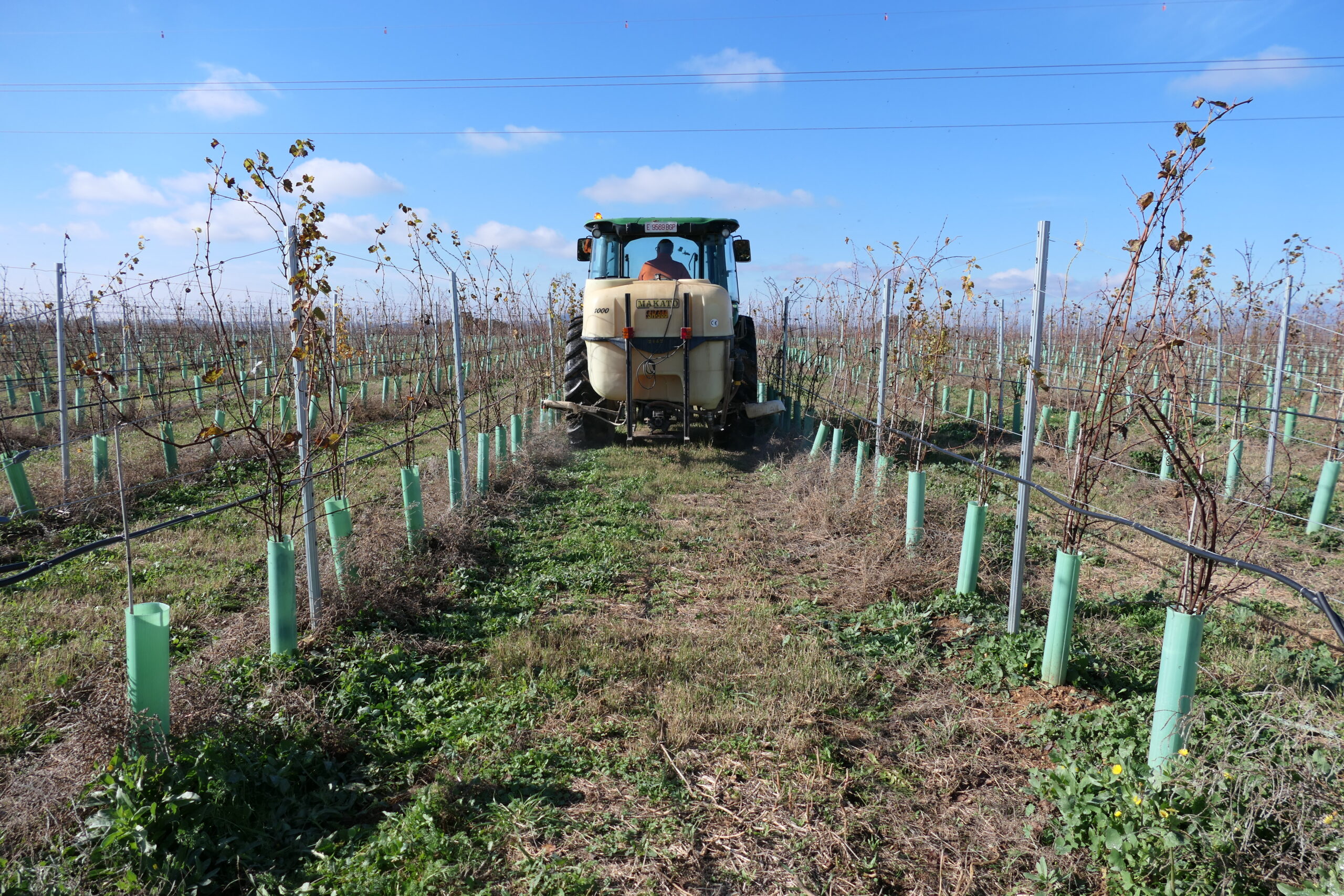
Since we understand that what isn’t measured can’t be controlled, we have mapped the biodiversity of our vineyards, and we are continuously working on practices that enhance it. For example, most of our vineyards have plant cover, use organic fertilisers, some are certified organic, and we are implementing regenerative viticulture practices. We have applied to various funding calls to expand these practices. We expect to begin new collaborative projects shortly.
Viñas del Vero is currently participating in Fuelphoria, an EU-funded innovation project that aims to develop sustainable value chains for producing biofuels and renewable energy from waste. Could you briefly explain what is being developed within the project?
At Viñas del Vero, we are working on converting the CO₂ produced during wine fermentation into methane via hydrogenation, using renewable hydrogen produced at our facilities. In this way, the winery will both reduce its carbon footprint by utilising the CO2 and lower its dependency on fossil fuels by using the produced methane.
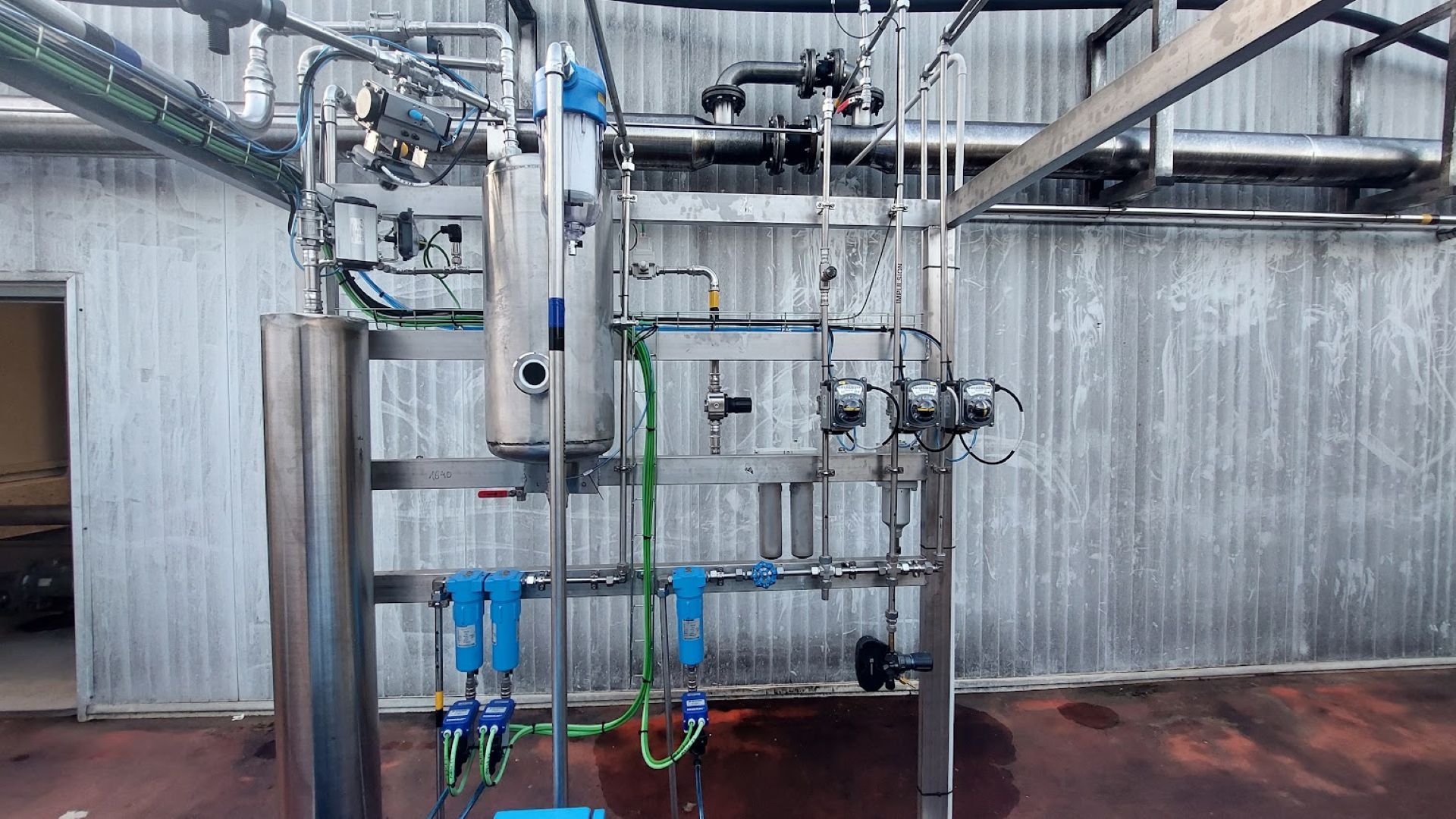
In technical terms, we are carrying out a CCUS case: carbon capture, use, and storage. Firstly, we capture the CO₂ during the grape fermentation process in the winery to later purify it. Secondly, the purified CO₂ needs to be compressed and stored. After that, it goes through a catalytic process in which it reacts with green hydrogen molecules to produce renewable methane with no carbon footprint. This methane must first be characterised, after which it will be mixed with the natural gas used in the winery’s thermal processes for testing.
In parallel to FUELPHORIA, Viñas del Vero is already using the generated CO₂ in various processes at the winery, such as tank inerting, pomace transfer, grape cooling, acidifying water, cleaning tanks, wine dealcoholisation, improving wastewater treatment, etc. We believe that all these developments should be shared, since the technology can be scaled across the sector relatively easily.
What motivated Viñas del Vero to take part in this project?
The reason is Viñas del Vero’s commitment to sustainability, as well as the technical team’s vision and conviction that this goal can be achieved. In recent years, the winery has participated in up to six international collaborative R&D&I projects. The first was a LIFE Project called Rewind, in which we installed the first hydrogen refuelling station ever operated by a private company in Spain.
Regarding Fuelphoria specifically, after studying our carbon footprint, we found that as much as 16% of it is biogenic, coming from the fermenting grapes. We quickly realised that we could act by turning the problem into an opportunity.
What key lessons or discoveries have emerged from the Fuelphoria project so far?
The first lesson is realising that human determination breaks down barriers. The project is extremely multidisciplinary: various universities, engineering firms, consultancies, tech companies and gas companies are involved. Thanks to everyone’s contributions, we now have considerable expertise in the potential of CCUS technologies in our sector, which we believe is unique in Spain.
An interesting discovery is that the CO₂ obtained is extremely pure, which is unusual for CO₂ derived from fermentative processes. Also, we have discovered that it is a highly scalable process. This applies both at the winery level – it can be implemented tank by tank – and across the sector – winery by winery. We hope many wineries will be encouraged to capture their fermentative CO₂.
What results have been achieved so far?
We are now in the second year of the four-year project. Regarding CO₂, we have captured up to 17 tonnes in 2025 and purified it to 99.95% purity. We have compressed it up to 39 barg and stored up to 400,000 litres of CO₂.
For methane production, we have succeeded in catalysing the process using green hydrogen from our solar-powered hydrogen refuelling station. During the rest of year of the project, our goals are to optimise and model the methane catalysis process and to improve the compression and storage of CO₂, ideally achieving liquefaction. In any case, the targets set have been comfortably exceeded. We also want to strongly focus on disseminating the results because our final aim is to encourage the sector to scale up the technology.
We now have considerable expertise in the potential of CCUS technologies in our sector, which we believe is unique in Spain.
In what ways do ecological practices in wine production enhance the competitiveness of your products in the market?
The sector is currently experiencing a decline in consumption, and the market is changing. Overall consumption is falling, but consumers are choosing products with new attributes, moving towards options that are more sustainable, organic, healthy, functional, socially responsible, experiential and of good quality.
Our company is positioned precisely in that space: products with a reduced carbon and water footprint, lower alcohol content, free from chemicals, and offering nature experiences by opening the winery to consumers and creating spaces and activities for enjoyment – all with rigour, honesty and verifiable quality.